Is 'Vegetarian' the Same in Malaysia as Back Home?
In KL, vegetarian food is rooted in Buddhist and Hindu spiritual practice, not wellness trends. The rules are completely different depending on who cooked your food. Here is what you need to know before you order.
Updated June 2026: This guide has been refreshed with the latest insights from our guides, who take guests through KL's vegetarian food spots every week. TL;DR: Vegetarian food in KL is nothing like vegetarian food back home. Here, it's rooted in Buddhist and Hindu spiritual practice, not health trends, and that changes everything about what ends up on your plate. Some dishes include eggs. Some exclude onion and garlic entirely. Some Buddhists on --- The first time someone in KL tells you they're vegetarian, don't assume you know what that means. Back home, whether that's London, Sydney, or New York, vegetarian usually means one thing: no meat. It's a dietary choice. Maybe ethical, maybe health-related. The rules are pretty clear. In Kuala Lumpur, the same word covers something completely different. Vegetarian food here grew out of Buddhist merit-making, Hindu devotion, and Taoist spiritual discipline. These are practices that go back centuries. The food that came from them is some of the most interesting you'll eat in this c We've been taking people through KL's vegetarian food spots for 14 years. The question we hear most isn't "where do I eat?" It's "why does vegetarian food here work so differently?" This post answers that. --- Why Vegetarian Food in KL Isn't What You Expect KL sits at a cultural crossroads. Three distinct communities have shaped how vegetarian food looks and tastes here: Chinese Buddhist, Tamil Hindu, and increasingly, health-conscious Malaysians following a newer plant-based wave. 35% of Malaysians now regularly eat plant-based meals, according to Statista's 2025 data. But that number includes people eating vegetarian for very different reasons. Some are doing it for health. Many are doing it The wellness trend is real. But it's layered on top of something much older. The Buddhist and Hindu vegetarian traditions in Malaysia weren't imported last decade. They arrived with the communities themselves, generations ago, and took root in neighbourhoods, temples, and family kitchens across the When you understand that, the food starts to make sense. --- So What Does "Vegetarian" Actually Mean Here? In Malaysia, "vegetarian" means something different depending on who cooked your food. Chinese Buddhist vegetarian food typically excludes all meat, eggs, dairy, and the five pungent roots: onion, garlic, chives, spring onion, and leeks. South Indian vegetarian food often includes eggs and dairy, bu This trips up visitors constantly. You order something labelled vegetarian at a Chinese Buddhist stall and wonder why there's no garlic flavour. You order at a Tamil restaurant and find egg in your thosai. Neither is wrong. They're just different traditions with different rules. The Chinese Buddhist tradition is particularly fascinating. What you'll find at Buddhist temple canteens and 素食 (sù shí) stalls is often entirely plant-based, long before "vegan" became a marketing word. The five pungent roots are avoided be South Indian vegetarian food follows the Hindu tradition. Eggs and dairy are frequently included. The flavour profiles are bolder: tamarind, mustard seeds, curry leaves, coconut. Banana leaf rice with vegetable curries, thosai with sambar, idli with coconut chutney. Rich, complex, and filling. Same word. Very different kitchens. --- The Buddhist Calendar and the Days Everything Changes Here's something most visitors never know, and we love watching people's faces when we explain it. Many Chinese Buddhists in Malaysia eat vegetarian on the 1st and 15th of each lunar month. It's a merit-making practice. A way of honouring the occasion with discipline and restraint. On those days, something shifts in the city's food scene. Stalls that normally sell mixed food put out vegetarian menus. Temple canteens run buffets that start at dawn and sell out before lunc Uncle Chen, one of the vendors we visit on our Chinatown food walks, makes his handmade steamed buns every morning. On the 1st and 15th, his vegetarian varieties go first. Always. He's been watching this pattern for decades. If you happen to be in KL on one of those days, go early. The food is worth it, and the atmosphere in the stalls and temple canteens is something you won't see on a regular Tuesday. --- Does That Mean Vegetarian Food Here Is Always Egg-Free? No, and this is probably the most important thing to know before you order. Chinese Buddhist vegetarian food is usually fully plant-based: no eggs, no dairy, no five pungent roots. South Indian vegetarian food regularly includes eggs and dairy. A "vegetarian" label means different things at differen The simplest way to tell the difference before you order: look for the characters 素食 (sù shí). That's the Chinese term for Buddhist vegetarian food. If you see that sign, you're in a place following the stricter definition. No meat, no eggs, no dairy, no onion, no garlic. At Indian stalls, the word "vegetarian" is usually displayed in English or Tamil. The rules are different there: eggs may be in, dairy is common, and the flavour base will reflect it. Neither approach is more "correct." They're just rooted in different spiritual traditions. The practical takeaway: when in doubt, ask. Point to the dish and say "ada telur?" (any eggs?). Most stall owners are happy to explain. In our experience, they appreciate the curiosity. --- Where This Food Actually Comes From The Chinese Buddhist vegetarian tradition in Malaysia came with the Hokkien, Cantonese, and Hakka immigrants who built KL's Chinatown and surrounding neighbourhoods. They brought their temple practices with them. The vegetarian food culture that exists in those streets today traces directly back to The Tamil Hindu tradition arrived with South Indian labourers and traders. The banana leaf rice stalls in Brickfields and Little India serve food that connects directly to South Indian temple cuisine: rice, lentils, coconut-based curries, pickles, and pappadum, all made without beef or pork. Walk through Kuala Lumpur's food neighbourhoods and you're walking through that layered history. It's there in the signage, in the ingredients, in the way certain stalls smell different from the ones next to them. Our Chow Kit Market tour puts you right in the middle of it. The Chow Kit wet market is where you see the raw ingredients of both traditions side by side: the tofu blocks and mock meat products from the Buddhist suppliers, the fresh curry leaves and dr The plant-based food industry in Malaysia is growing at 18% annually right now, driven partly by a new generation of health-conscious Malaysians. But what makes KL's vegetarian scene genuinely interesting isn't the new wave. It's the --- How Do I Navigate Vegetarian Food in KL as a Visitor? The single most useful thing you can learn: look for 素食 signs in Chinese script. That tells you the place follows Buddhist vegetarian standards, no meat, no eggs, no dairy, no five pungent roots. These spots are everywhere once you know what to look for. At Indian restaurants and stalls, ask about eggs and dairy directly. Most places are happy to tell you exactly what's in a dish. At Malay hawker stalls, be careful. Many dishes that look vegetarian contain belacan (shrimp paste) or were cooked in lard. This isn't carelessness, it's just that "vegetarian" in the Western sense isn't always the default assumption. We'll cover this in detail in our next guide on the [hidden meat The spots that locals know are vegetarian, temple canteens, Buddhist stalls, long-running family operations, often don't advertise themselves. They don't need to. The community already knows. That's exactly where we take guests. --- KL Is One of the Great Vegetarian Cities in Asia Here's the short version of everything above. Vegetarian food in KL is a spiritual category before it's a dietary one. The rules genuinely differ by tradition: Chinese Buddhist food is often stricter than Western veganism, while South Indian vegetarian food follows a completely different logic. And on the 1st and 15th of the lunar month, the wh Once you understand the cultural logic, the food makes beautiful sense. It's not confusing, it's rich. And it opens up parts of the city that most visitors never reach. We've been navigating this for 14 years. Come eat with us, and we'll show you the spots, the stalls, and the stories that don't make it onto any map. Have a look at what we do together. --- Frequently Asked Questions Is KL good for vegetarians? Yes, genuinely. KL has one of the most developed vegetarian food scenes in Southeast Asia, rooted in Chinese Buddhist and South Indian Hindu traditions that go back generations. The variety is enormous, from temple canteens to hawker stalls to full restaurants. Once you know how to read the signs, y What does 素食 mean and how do I spot it? 素食 (pronounced sù shí) is the Chinese term for Buddhist vegetarian food. It means the food excludes all meat, eggs, dairy, and the five pungent roots (onion, garlic, chives, spring onion, leeks). Look for this on signage outside stalls and restaurants, it's your clearest guide to strictly plant-base Why do some vegetarian dishes in Malaysia have no onion or garlic? This comes from the Chinese Buddhist tradition, which avoids the five pungent roots: onion, garlic, chives, spring onion, and leeks. They're believed to stimulate the mind and disturb spiritual practice. If your vegetarian dish tastes unusually mild or subtly sweet, that's likely why. It's a feature What is the Buddhist vegetarian tradition in Malaysia, and why do some people only eat vegetarian twice a month? Many Malaysian Chinese Buddhists observe vegetarian days on the 1st and 15th of the lunar calendar as a merit-making practice. It's a form of spiritual discipline rather than a permanent dietary choice. On those days, vegetarian stalls get busy early and temple canteens run special menus. Can Simply Enak accommodate vegetarian guests on their tours? Yes, completely. We've been accommodating vegetarian guests for 14 years, and we know exactly where to take you. Our tours include stops that work beautifully for vegetarians, from the Chow Kit Market to Chinatown's Buddhist stalls. Just let us know when you book and we'll make sure every stop works Frequently Asked Questions Is KL good for vegetarians? Yes, genuinely. KL has one of the most developed vegetarian food scenes in Southeast Asia, rooted in Chinese Buddhist and South Indian Hindu traditions that go back generations. What does 素食 mean? 素食 (sù shí) is the Chinese term for Buddhist vegetarian food. It means no meat, eggs, dairy, or the five pungent roots (onion, garlic, chives, spring onion, leeks). Look for this sign. Can Simply Enak accommodate vegetarian guests on tours? Yes, completely. We have been accommodating vegetarian guests for 14 years. Just let us know when you book and we will make sure every stop works for you. --- Ready to taste KL's vegetarian food with a local? Browse our tours and join us.
Love what you just read?
Stay in the loop, add Simply Enak to your Google favorites so you never miss a story.
Ready to taste these flavours yourself?
Join a Simply Enak food tour in Kuala Lumpur or Penang. Small groups, local guides, authentic experiences since 2011.
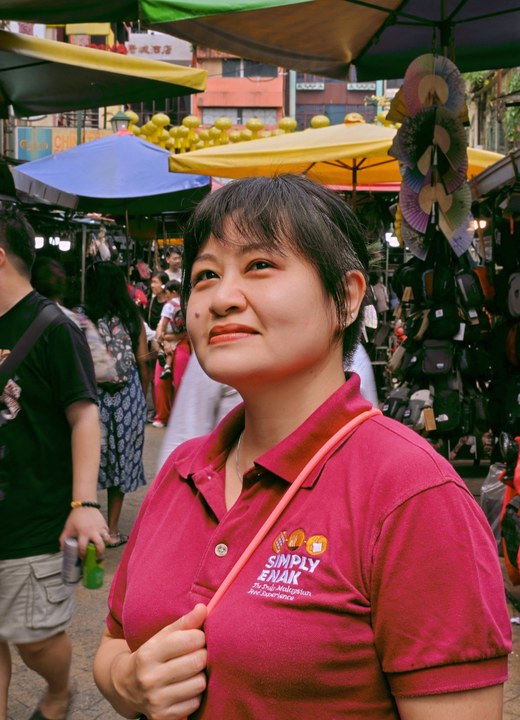
Pauline
Simply Enak Food Experiences
Pauline has been guiding food tours in Malaysia since 2011, sharing hidden gems and family-run stalls with travellers from around the world.
You might also like