Penang Street Food: What to Order and What to Skip
The Street Food Guide to Penang Penang has a reputation that precedes it. Travel magazines call it the food capital of Malaysia.
Pauline
Simply Enak
The Street Food Guide to Penang
Penang has a reputation that precedes it. Travel magazines call it the food capital of Malaysia. Locals from other states roll their eyes at the claim, but they still drive six hours from KL on a weekend just to eat here. There is a reason for that. Penang's street food is different from the rest of the country. The flavours are sharper, the noodles are thinner, the spice hits differently, and every hawker seems to have inherited a recipe that no one else can replicate.
The island's food culture is shaped by its history. George Town is a UNESCO World Heritage site, a port city where Malay, Chinese, Indian, Nyonya, and European influences collided over centuries. That mix is on every plate. This guide covers the four essential areas for street food in Penang and the dishes you need to eat at each one.
Gurney Drive: The Well-Known Hawker Centre
Gurney Drive is a coastal road in George Town with a long row of hawker stalls operating under a covered walkway. This is the best-known hawker centre in Penang and the most convenient for first-time visitors. The stalls are permanent, the seating is plentiful, and you can sample ten different dishes without walking more than fifty metres.
The trick to Gurney Drive is knowing which stalls to queue at. Not every stall here is good. Some coast on their location. The ones worth waiting for have queues that start before the dinner rush.
Penang laksa (also called assam laksa) is the dish that defines the island. A sour, spicy fish broth made with tamarind, lemongrass, galangal, and flaked mackerel, poured over thick rice noodles, and topped with shredded cucumber, pineapple, onion, mint, and a spoonful of shrimp paste. The broth is tangy, the herbs are fresh, and the combination is unlike any other noodle soup in Malaysia. The laksa stall at the northern end of Gurney Drive, third row from the sea, has been operating for over 30 years. A bowl costs RM 6. Look for the stall with the handwritten sign and the queue of older Penangites.
Char kway teow in Penang is made with a thinner, smaller noodle than the KL version. The Penang style uses more dark soy sauce, more cockles, and a heavier hand with the chilli. The result is a darker, richer, spicier plate of noodles. The char kway teow stall two rows behind the laksa stall uses duck eggs instead of chicken eggs. The yolk is deeper in colour and the noodles take on a creamier texture as a result.
Cendol at Gurney Drive is the standard dessert after a laksa. The ice is shaved by hand at most stalls. The green jelly is made from rice flour and pandan. The coconut milk is fresh. The gula melaka syrup is dark and slightly bitter. The cendol at the stall near the centre entrance is the one to order.
Chulia Street: George Town's Food Spine
Chulia Street runs through the heart of the George Town heritage zone. During the day it is a busy road of shophouses and backpacker hostels. In the evening it transforms into a street food corridor. The hawkers here cater to a mix of locals and international visitors, but the locals are more discerning. The stalls that survive on Chulia Street are the ones residents of George Town walk to for dinner.
Hokkien mee in Penang is a prawn noodle soup. The broth is made by simmering prawn shells and pork bones for hours until it turns a deep, rusty orange. Yellow noodles and rice vermicelli are served together in the same bowl, topped with prawns, sliced pork, hard-boiled egg, and a dollop of sambal. The Hokkien mee at the corner of Chulia Street and Jalan Masjid Kapitan Keling is the best-known version. It sells out by 8 PM most nights. Go early.
Wan tan mee on Chulia Street is served dry with a dark soy dressing, topped with barbecued roast pork and wantan dumplings in a separate bowl of broth. The noodles at Kedai Kopi Heng Huat on Chulia Street are thinner than standard wan tan mee noodles and springier in texture. The char siew here is roasted with honey and five-spice powder, giving it a caramelised edge that balances the savoury soy dressing.
Oyster omelette (orh jian) is a Penang street food staple. Small fresh oysters are folded into a batter of egg and tapioca starch and fried until crispy on the edges and soft in the middle. The stall on Chulia Street near the junction with Love Lane serves it with a sweet-spicy chilli sauce and a generous squeeze of lime. The contrast between the crispy edge and the soft, slippery interior is the point of the dish.
Air Itam: The Laksa Heartland
Air Itam is a suburb in the hills above George Town, best known for the Kek Lok Si temple and its own version of Penang laksa. The food here is less polished than the George Town equivalent and more rewarding as a result.
The Air Itam market area on Jalan Pasar has several laksa stalls that predate the tourism boom. The broth at the Air Itam laksa stalls is sourer and fishier than the George Town versions. They use a higher proportion of mackerel to water, which makes the broth thicker and more intense. The noodles are cut wider here. The pineapple is sliced thinner.
Penang laksa at Air Itam is served with a thicker tamarind base and a heavier garnish of mint and torch ginger flower. The stall directly opposite the Air Itam market entrance has been running since the 1970s. The owner's mother started it. She still comes in to check the broth most mornings.
Curry mee in Air Itam is a different beast from the KL version. The Penang curry mee uses a coconut milk broth that is thinner and spicier. It is served with yellow noodles and vermicelli, tofu puffs, cockles, and a squirt of lime. The curry mee at the Air Itam food court (the one behind the bus terminal) is the pick of the area.
Batu Ferringhi Night Market
Batu Ferringhi is the beach strip on the northern coast of Penang, and its night market is the most tourist-oriented street food experience on the island. But tourist-oriented does not mean bad. The Batu Ferringhi night market runs along the main road every evening from about 7 PM, with hundreds of stalls selling clothes, souvenirs, and food.
The food section is at the eastern end of the market, closer to the McDonald's end of the strip. Most of the stalls here serve Malaysian-Chinese street food adapted for an international palate. The flavours are slightly dialled back on the spice, but the quality is still higher than what you would find at a comparable market in most countries.
Grilled seafood is the main draw. Stalls display fresh fish, prawns, squid, and lobster on ice. You pick what you want, they weigh it, and it goes on the grill. The squid stuffed with sambal is the best option for the price. A large squid costs around RM 15.
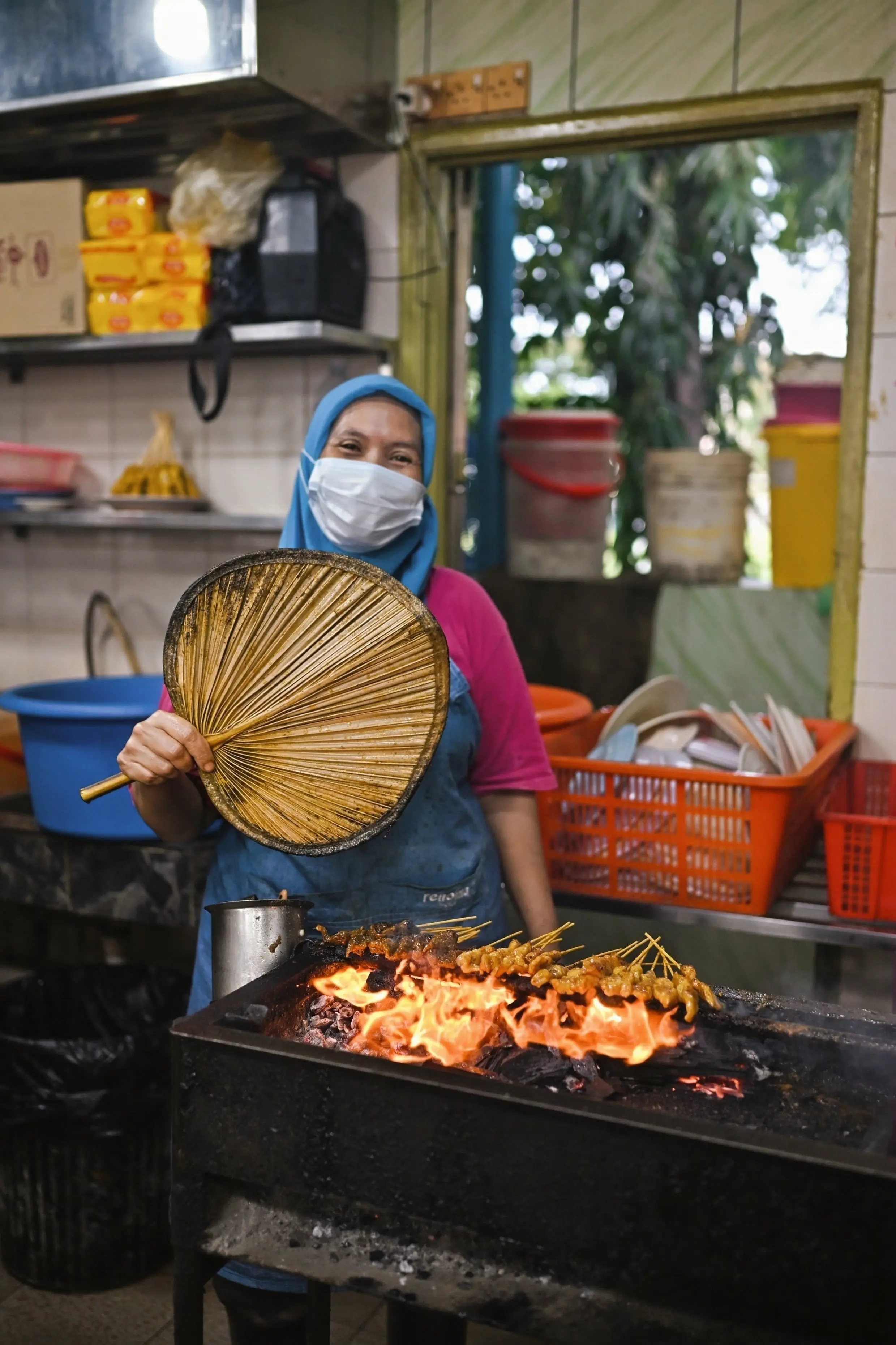
Satay at Batu Ferringhi is made with larger skewers than the George Town equivalent. The marinade is sweeter, leaning towards the Malay style. The peanut sauce is thinner. It works as a snack between seafood courses.
Roti canai is available at the Indian-Muslim stall near the market midpoint. The roti here is thinner and crispier than the standard, almost like a flaky paratha. It is served with dal and a small bowl of curry. RM 3 each.
Practical Advice for Eating Street Food in Penang
Cash is still king at Penang hawker centres. Most stalls do not accept cards. ATMs are plentiful in George Town but scarce in Air Itam and Batu Ferringhi.
Penang street food operates on its own schedule. Hawker stalls open for specific windows and close when the food runs out. The Gurney Drive stalls open around 5 PM but the best stalls sell out by 8 PM. Chulia Street food runs later, with many stalls still serving at 10 PM. Air Itam laksa is a lunchtime dish : the stalls close by 3 PM.
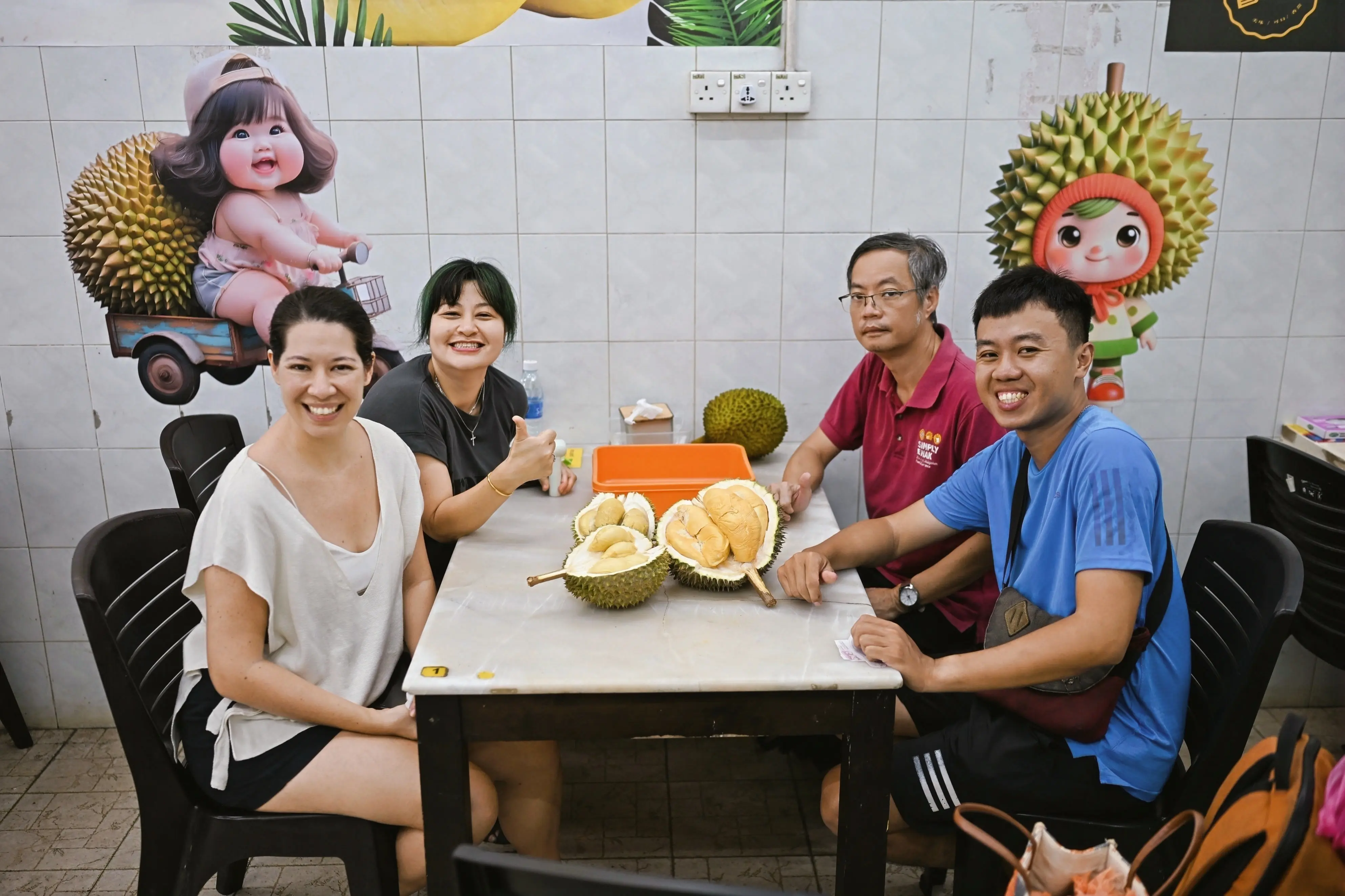
The queues are not optional. If you see a long line at a Penang hawker stall and a nearby stall with no line, join the queue. Penangites queue for good food the same way they queue for durian season. The line moves fast because the hawker has been doing this for decades.
Penang's street food reputation is earned. But it helps to have someone who knows the difference between the stall that has been here for thirty years and the one that opened last month to cash in on the tourists. The Simply Enak Penang food tour covers Gurney Drive and Chulia Street in a single afternoon, with a local guide who grew up eating at these same stalls.
Ready to taste these flavours yourself?
Join a Simply Enak food tour in Kuala Lumpur or Penang. Small groups, local guides, authentic experiences since 2011.
Pauline
Simply Enak Food Experiences
Pauline has been guiding food tours in Malaysia since 2011, sharing hidden gems and family-run stalls with travellers from around the world.
You might also like
Enjoyed this story? Browse all stories →