Halal Food Guide to Penang
The Halal Food Guide to Penang You are standing on Chulia Street in George Town.
The Halal Food Guide to Penang
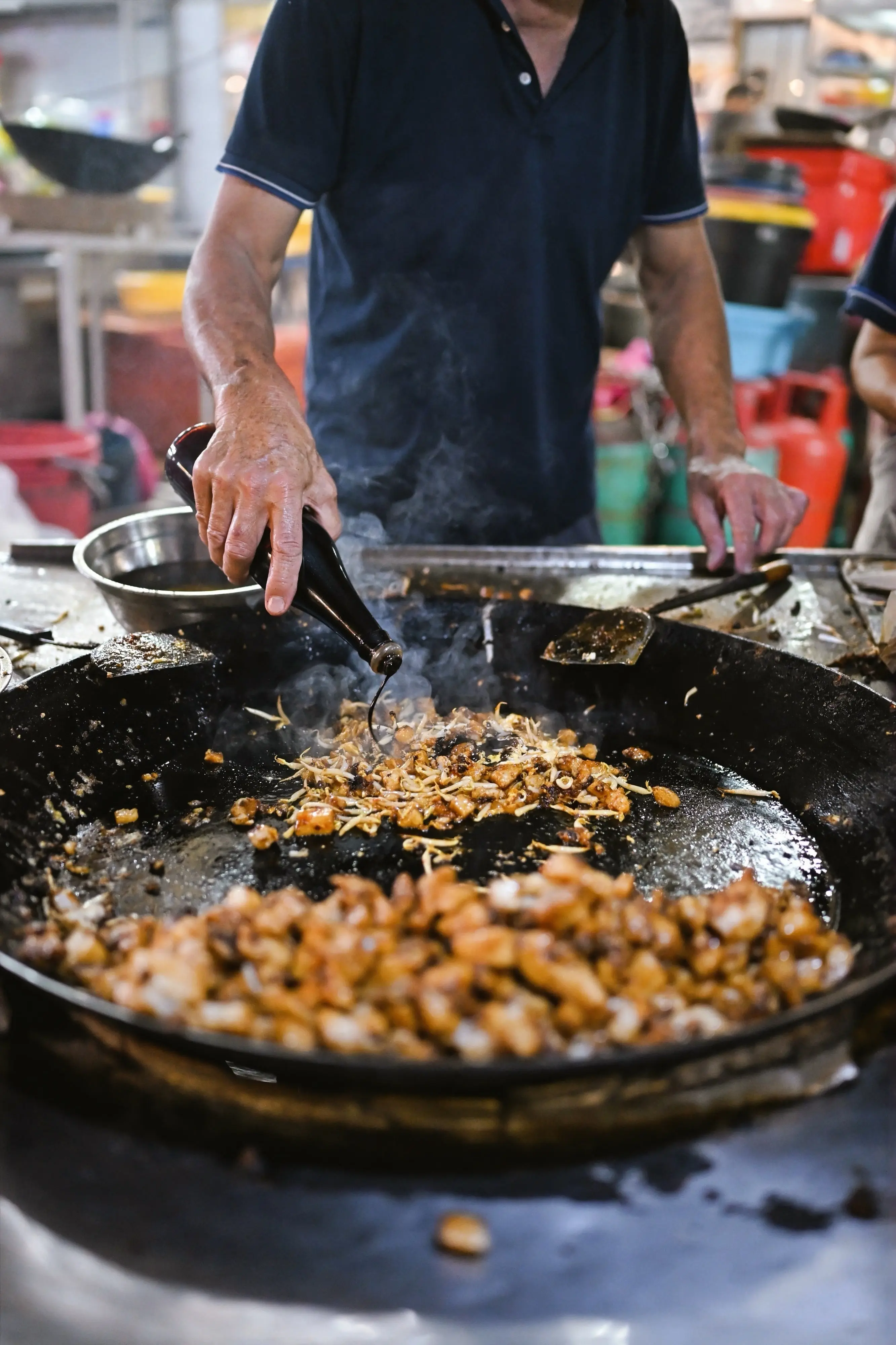
You are standing on Chulia Street in George Town. The smoke rising from a Chinese hawker's wok smells like the best meal of your trip. You want to order. But you pause. Is the food halal? The stall has no certificate on display. The cook does not speak much English. You move on without ordering.
You do not need to do this in Penang. The island has a halal food scene that covers everything from Malay street food to Indian-Muslim nasi kandar to halal-certified Chinese hawkers. The key is knowing which areas to head to and which dishes to order at each one.
How Halal Works in Penang
In Malaysia, halal certification is managed by JAKIM. A JAKIM logo means the establishment has been inspected and approved. But many stalls in Penang serve halal food without formal certification. Malay-owned stalls do this as a matter of religious practice. Indian-Muslim (Mamak) stalls operate the same way. The food is halal, even without the logo.
The challenge is Chinese food. Lard and pork are standard ingredients in Chinese cooking. At Chinese stalls, you want either a JAKIM certificate or a recommendation from someone who knows.
For Muslim visitors, Penang's halal food falls into three categories: Malay food, Indian-Muslim food, and certified halal Chinese food. Each has its own neighbourhoods and its own signature dishes.
Nasi Kandar in George Town: The Halal Standard
Nasi kandar is Penang's most well-known halal dish. It is rice served with a selection of curries and sides. The vendor pours curry sauce over the rice from a height, mixing the flavours as the sauce lands. It is an Indian-Muslim dish, which means it is halal by default.
Line Clear Restaurant on Lebuh Penang (at the junction with Chulia Street) is the best-known nasi kandar in Penang. It operates 24 hours a day. Rice is served with your choice of curries: fish curry, chicken curry, dal, and vegetable curry. The fried chicken is cooked in a turmeric batter that stays crispy even after the curry sauce hits it. The queue stretches down the street at lunchtime. The staff are fast and efficient. Point at what you want from the display and your plate is built in under a minute.
Restoran Nasi Kandar Beratur on Lebuh Kimberley is another essential stop. The name means "queue up" in Malay, and for good reason. The queue here starts forming before the stall opens at 11 AM. The draw is the fish curry: tangy with tamarind, hot from dried chillies, and thin enough to soak into the rice. Order it with fried chicken, okra, and a hard-boiled egg.
Gurney Drive: Malay Stalls with a View
Gurney Drive hawker centre operates every evening from about 5 PM to 11 PM. The stalls here cover every cuisine, but the Malay section is the one to focus on for halal food.
The Malay stalls at Gurney Drive are concentrated at the southern end of the hawker centre. Look for stalls with green awnings and Malay-language menus. Every one of them is halal.
Nasi lemak at Gurney Drive is served by a stall near the centre of the Malay section. Coconut rice, sambal, fried chicken, boiled egg, and anchovies. The sambal here is made fresh each evening and has a deeper chilli flavour than the mass-produced versions. The fried chicken is cooked to order. RM 7.
Satay at Gurney Drive is grilled over charcoal. Chicken and beef skewers, served with peanut sauce, cucumber, and ketupat (compressed rice cakes). The satay stall at the seaward end of the hawker centre has been operating since the 1980s. The smoke from the charcoal grill carries across the whole seating area and creates a map of where the good food is. RM 1.20 per skewer.
Ikan bakar (grilled fish) is an evening-only offering. The stalls on the seaward side set up charcoal grills and display fresh fish, prawns, and squid on ice. The fish is marinated in a spice paste, wrapped in banana leaf, and grilled until the flesh flakes. The stingray (ikan pari) is the best option. It is grilled with a sambal topping and served with fresh lime and a dipping sauce.
Rendang at the Malay stalls is slow-cooked beef in coconut milk and spices. It looks dry and dark brown. That is the point. The liquid has cooked down over hours until the meat is tender and the flavour is concentrated. The rendang at the Malay section of Gurney Drive is made in small batches and sells out by 8 PM.
Penang Road: Indian-Muslim Mamak Territory
Penang Road runs through the heart of George Town and is lined with Mamak restaurants that stay open late. These are Indian-Muslim establishments, halal by practice and open from morning until well past midnight.
Roti canai at the Mamak stalls on Penang Road is stretched and flipped by hand. The dough is slapping the counter before you have finished ordering. The standard order is roti canai with dal or curry. The murtabak is the stuffed version: minced beef, egg, and onion folded into the stretched dough and fried on a flat grill until golden. The murtabak at the stall near the junction with Lebuh Campbell is the best on this strip.
Mee goreng is the Mamak version of fried noodles. Yellow noodles are stir-fried with soy sauce, chilli, egg, and vegetables. The version on Penang Road uses a thicker, sweeter soy sauce than the Chinese equivalent. Add a squeeze of lime and a spoonful of pickled green chillies.
Teh tarik is pulled tea, a Mamak invention. Hot milk tea is poured between two cups held at a distance, creating a thick foam on top. Every Mamak stall on Penang Road serves it. It is sweet, creamy, and the standard drink with any meal here.
Halal Chinese Food: Tricky but Possible
Halal-certified Chinese hawkers exist in Penang but are harder to find than in KL. The concentration is lower, and the stalls that do have certification tend to be in specific locations.
The area around the KOMTAR building has several halal Chinese stalls in its food courts. The wantan mee at the halal section of the KOMTAR food court uses chicken char siew instead of pork, and the wantan dumplings are made with chicken filling. The noodles are tossed in dark soy sauce and served with a side of clear broth.
Restoran Nasi Ayam Hainan at several locations in George Town serves halal-certified Hainanese chicken rice. The chicken is poached, the rice is cooked in chicken stock and pandan, and the chilli sauce is made fresh. Look for the JAKIM certificate on the wall.
The General Tip: If you want halal Chinese food in Penang without hunting for certificates, ask at your hotel or guesthouse. The staff will know which stalls in the area have halal certification. Penang's Muslim community is large enough that word of mouth is reliable.
The Simple Strategy
For a short visit to Penang, stick to Malay and Indian-Muslim food. You will never run out of options. Malay food lives at Gurney Drive and in the Malay neighbourhoods of George Town. Indian-Muslim food is on every corner of Penang Road and in the nasi kandar stalls around Kapitan Keling. Halal Chinese food is available but requires more effort to find.
The advantage of Penang is that the food is concentrated. You can eat nasi kandar for breakfast, nasi lemak for lunch, roti canai for an afternoon snack, and satay for dinner, all within a fifteen-minute walk of each other in central George Town.
A local guide who knows the neighbourhoods and the vendors makes the whole process simpler. The Simply Enak food tours in Penang visit the stalls that have been feeding the local Muslim community for decades. No questions, no uncertainty, just the food that works for you.
Love what you just read?
Stay in the loop, add Simply Enak to your Google favorites so you never miss a story.
Ready to taste these flavours yourself?
Join a Simply Enak food tour in Kuala Lumpur or Penang. Small groups, local guides, authentic experiences since 2011.
Pauline
Simply Enak Food Experiences
Pauline has been guiding food tours in Malaysia since 2011, sharing hidden gems and family-run stalls with travellers from around the world.
You might also like