Kampung Baru Food Guide
Kampung Baru Food Guide Kampung Baru is a traditional Malay village in the middle of Kuala Lumpur.
Kampung Baru Food Guide
Kampung Baru is a traditional Malay village in the middle of Kuala Lumpur. The skyscrapers of the KLCC district rise directly behind it. The contrast is jarring and deliberate. Kampung Baru is a village that has refused to be swallowed by the city. Walking through it feels like stepping into a different Kuala Lumpur, one where wooden houses sit on stilts and the evening air smells of grilled satay and coconut rice.
The food in Kampung Baru is Malay food at its source. This is not a place for fusion or reinterpretation. The stalls here serve the dishes that Malay families have been cooking for generations, and they serve them to people who have been eating here their whole lives.
Nasi Lemak: The Kampung Baru Standard
Nasi lemak in Kampung Baru is the local benchmark against which all other versions should be measured. The rice is steamed with coconut milk and pandan leaves until each grain is separate and fragrant. The sambal is made fresh each morning. The heat builds slowly rather than hitting all at once.
The nasi lemak stall opposite the Kampung Baru mosque on Jalan Haji Hussein is the most reliable in the neighbourhood. The queue starts forming before 7 AM and continues until they sell out, usually by 11 AM. The sambal is the key. It is made with shallots, dried chillies, belacan, and tamarind pulp. The shallots are fried until translucent before being ground into the sambal, which gives it a sweetness that balances the chilli heat.
Order nasi lemak with fried chicken. The chicken is marinated in turmeric and curry powder, then deep-fried until the skin is crisp and the meat is moist. The batter is thin. You taste the chicken, not the coating. RM 5.
For versions with more variety, the nasi lemak stalls along the main market strip serve the dish with rendang (beef slow-cooked in coconut milk and spices) and sambal sotong (squid in chilli sambal). The rendang is cooked until the coconut milk has evaporated and the meat is coated in a dry, fragrant paste.
Satay: Charcoal-Grilled Skewers
The satay in Kampung Baru is different from the version you find in KL's tourist zones. The skewers are smaller, the meat is more tender, and the marinade penetrates deeper because the meat is marinated overnight rather than for a few hours.
Stall 63 at the Kampung Baru night market has been operating since the 1990s. The satay is grilled over a charcoal fire that sits at the front of the stall. The smoke drifts across the street and functions as an advertisement. The chicken is marinated in coconut milk and turmeric, which gives it a yellow tint and a slight sweetness. The beef is marinated in a sweet soy-based mixture with lemongrass and galangal.
The peanut sauce at Stall 63 is thick with visible crushed peanuts. It is not as sweet as the Jalan Alor version. The tamarind is more prominent, and the chilli is ground fine rather than left in flakes. The sauce is served warm, straight from a pot that sits at the edge of the grill.
Order a stick of ketupat (compressed rice cake) with your satay. The ketupat is sliced and grilled briefly, then served alongside the skewers to wrap the meat. The combination of grilled meat, warm peanut sauce, and the neutral rice cake is the best way to eat satay.
Traditional Malay Kuih and Desserts
Kampung Baru is the best place in KL to try traditional Malay kuih, the steamed or fried snacks that are sold on trays and wrapped in banana leaves.
The kuih stall on Jalan Haji Hussein, near the entrance to the village, has been operated by the same family since the 1980s. The selection changes daily depending on what is made that morning. The standard options include:
Kuih lapis, a layered steamed cake made from rice flour, tapioca starch, and coconut milk. Each layer is steamed separately. The texture is bouncy, almost jelly-like.
Ondeh-ondeh, glutinous rice balls filled with gula melaka and rolled in grated coconut. The balls are boiled until they float, then rolled in fresh coconut flakes. The filling is liquid gula melaka that bursts when you bite into the ball.
Pulut inti, a square of steamed glutinous rice topped with a sweet coconut filling made from grated coconut, gula melaka, and pandan. The topping is cooked until the coconut is soft and the sugar has caramelised.
Kuih seri muka, a two-layer cake with a green pandan custard on top and a layer of glutinous rice on the bottom. The custard is made with coconut milk and eggs, steamed until set. The rice layer is salted to balance the sweetness of the custard.
Rendang and the Evening Market
The Kampung Baru evening market operates along Jalan Haji Hussein and the surrounding lanes from late afternoon until around 10 PM. This is where the cooked food stalls come alive.
Rendang in Kampung Baru is available at several stalls in the market. The beef rendang is cooked for hours until the meat is tender and the coconut milk has reduced to a thick, dark paste that coats every strand of meat. The spices cinnamon, cardamom, star anise, cloves, and dried chillies are ground fresh. The rendang at the market stall near the traffic circle is cooked in a large wok over a wood fire. The smoke from the fire adds a layer of flavour that gas cooking cannot reproduce.
Ayam percik is a grilled chicken dish that is a Kampung Baru specialty. The chicken is marinated in a coconut milk and spice blend, then grilled over charcoal while being basted with a thickened coconut sauce. The sauce drips onto the coals and creates a smoke that flavours the chicken. The result is chicken that is moist on the inside with a charred, flavourful exterior.
How to Eat in Kampung Baru
Kampung Baru is best visited in the late afternoon. The market stalls start setting up around 4 PM. By 6 PM, the full selection is available. The best food sells out between 8 PM and 9 PM.
Carry cash. The stalls do not accept cards. RM 20 per person is enough for a full meal with dessert and a drink.
The neighbourhood is a short walk from the Kampung Baru monorail station. Exit the station and walk towards the KLCC skyline. The village starts where the high-rise buildings end.
If you want a guided introduction to Kampung Baru's food stalls, the Simply Enak Kampung Baru food tour covers the nasi lemak, satay, and kuih stalls in a single evening walk through the village.
Love what you just read?
Stay in the loop, add Simply Enak to your Google favorites so you never miss a story.
Ready to taste these flavours yourself?
Join a Simply Enak food tour in Kuala Lumpur or Penang. Small groups, local guides, authentic experiences since 2011.
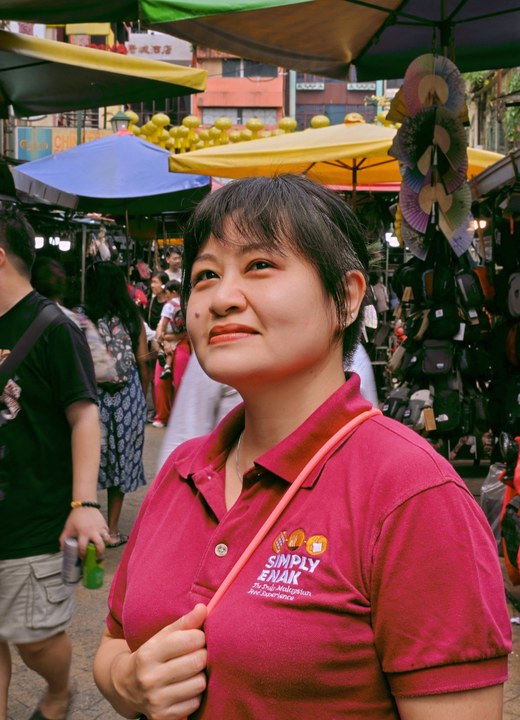
Pauline
Simply Enak Food Experiences
Pauline has been guiding food tours in Malaysia since 2011, sharing hidden gems and family-run stalls with travellers from around the world.
You might also like