KL Chinatown Food Guide
KL Chinatown Food Guide KL's Chinatown is centred on Petaling Street, a covered market that draws crowds for its counterfeit goods and counterfeit...
KL Chinatown Food Guide
KL's Chinatown is centred on Petaling Street, a covered market that draws crowds for its counterfeit goods and counterfeit handbags. The food is real. The surrounding streets Jalan Hang Lekir, Jalan Sultan, and Jalan Tun H S Lee contain some of the oldest and most consistent food stalls in the city.
The Chinese community that built KL arrived during the tin mining boom of the 19th century. They came from different regions of southern China: Hokkien, Cantonese, Hakka, Hainanese, and Teochew. Each group brought their own cooking. Chinatown is where you can still taste the differences.
Petaling Street: The Main Drag
Petaling Street itself is a covered walkway lined with stalls selling watches, shirts, and souvenirs. The food is at the edges, where the permanent shophouses open onto the street.
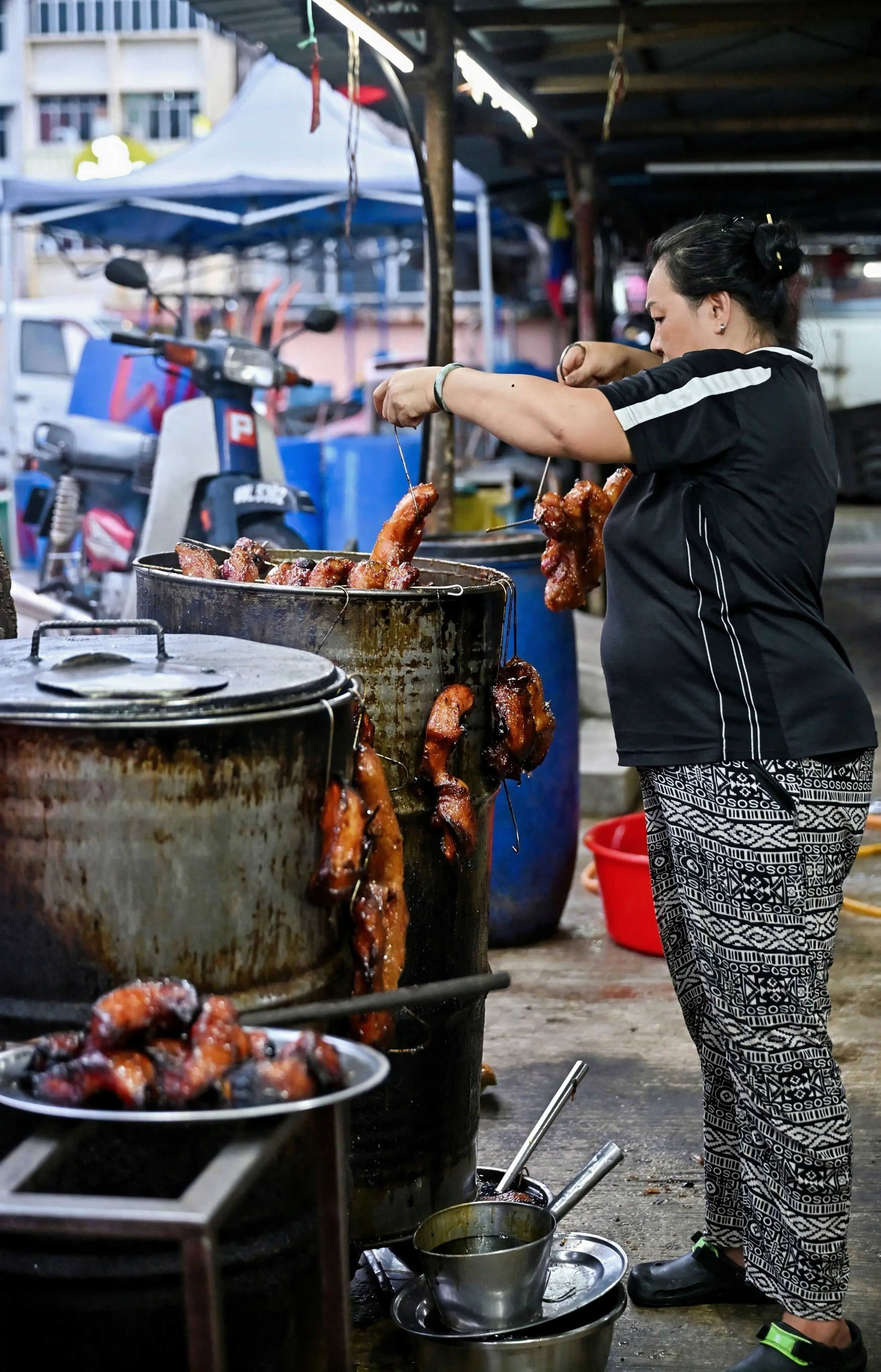
The wantan mee at the southern end of Petaling Street is a Chinatown benchmark. Thin egg noodles are tossed in a dark soy dressing with lard, served with slices of char siew (barbecued pork) and wantan dumplings in a separate bowl of broth. The char siew should have caramelised edges and a soft interior. The noodles should be springy, not claggy.
Restoran Soo Kee on Jalan Hang Lekir serves the most consistent version. The queue at lunch confirms it. The char siew is roasted in a charcoal oven visible from the street. The skin is crisp. The fat is rendered just enough that it melts on the tongue without being greasy.
The fried Hokkien prawn noodles at the Petaling Street end of Jalan Tun H S Lee are another must-order. Yellow noodles and rice vermicelli are stir-fried with prawns, squid, pork, and a broth made by simmering prawn heads and shells for hours. The broth stains the noodles a deep orange. Add a squeeze of calamansi and a spoonful of sambal to balance the richness.
Jalan Hang Lekir: The Street That Matters
Jalan Hang Lekir runs parallel to Petaling Street and has a higher concentration of quality food stalls than the main drag.
The cendol stall at the corner of Jalan Hang Lekir and Petaling Street has been operating since the 1960s. The family that runs it makes the green jelly noodles from scratch using rice flour and pandan. The coconut milk is fresh, not canned. The gula melaka syrup is sourced directly from Malacca. The shaved ice is pressed into a compact mound and the syrup is poured over it in a slow stream. RM 3.50.
The oyster omelette across the street is fried to order on a flat griddle. Small oysters are folded into a batter of eggs and tapioca starch. The edges are fried until crispy while the centre stays soft and gooey. Served with a sweet chilli dip. The stall adds a sprinkle of ground white pepper that cuts through the richness of the egg.
The curry puff stall on Jalan Hang Lekir makes three versions: potato and egg, sardine, and chicken. The pastry is a flaky shortcrust, fried until golden. The potato version is the most popular and sells out first. The filling is curried potato with a hard-boiled egg quarter inside, spiced with turmeric and cumin.
Jalan Sultan and the Cantonese Corner
Jalan Sultan runs perpendicular to Petaling Street and has a cluster of Cantonese restaurants that have been here since the early 1900s.
Restoran Yut Kee on Jalan Tun H S Lee is technically just outside Chinatown but is the best-known Hainanese-Cantonese kopitiam in KL. It opened in 1928. The building has changed, but the menu has barely adapted. The Hainanese chicken chop is the dish to order: a breaded chicken cutlet fried and served with a thick, savoury gravy that combines Worcestershire sauce, tomato ketchup, and soy sauce. It is British colonial cooking filtered through Chinese tastes.
The roasted duck at Kedai Makanan dan Minuman Kwai Seng on Jalan Tun Tan Siew Sin is another Chinatown institution. The ducks are hung in the front window, glazed with maltose and soy, and roasted in a charcoal oven. The skin is so thin and crisp it shatters. The meat underneath is moist and deeply savoury. Order the thigh portion if it is available.
Tips for Eating in Chinatown
Chinatown's food stalls operate on overlapping schedules. The breakfast stalls wantan mee, curry puffs, and coffee shops start service around 7 AM and close by 2 PM. The afternoon stalls cendol, popiah, and fried snacks open around 11 AM and run until 6 PM. The dinner stalls roasted duck, barbecued meat, and some noodle shops open for lunch and reopen for dinner from 5 PM to 9 PM.
The best strategy is to arrive in the late morning. Grab breakfast at Soo Kee or Yut Kee, walk through Petaling Street, and eat cendol around noon. Dinner can be roast duck or Hokkien prawn noodles at the Jalan Sultan end.
Cash is essential. Almost no stalls accept cards. RM 30 per person will cover multiple dishes and drinks.
If you want a guide to take you through the stalls and explain what to order at each one, the Simply Enak Chinatown food tour covers Petaling Street, Jalan Hang Lekir, and the Cantonese restaurants of Jalan Sultan in a single walk.
Love what you just read?
Stay in the loop, add Simply Enak to your Google favorites so you never miss a story.
Ready to taste these flavours yourself?
Join a Simply Enak food tour in Kuala Lumpur or Penang. Small groups, local guides, authentic experiences since 2011.
Pauline
Simply Enak Food Experiences
Pauline has been guiding food tours in Malaysia since 2011, sharing hidden gems and family-run stalls with travellers from around the world.
You might also like