Gluten-Free Food Guide to Penang
Kuey teow, laksa, nasi kandar and thosai: which Penang dishes are naturally gluten free, which sauces hide wheat, and where to eat safely. A local guide.
Gluten-Free Guide to Penang
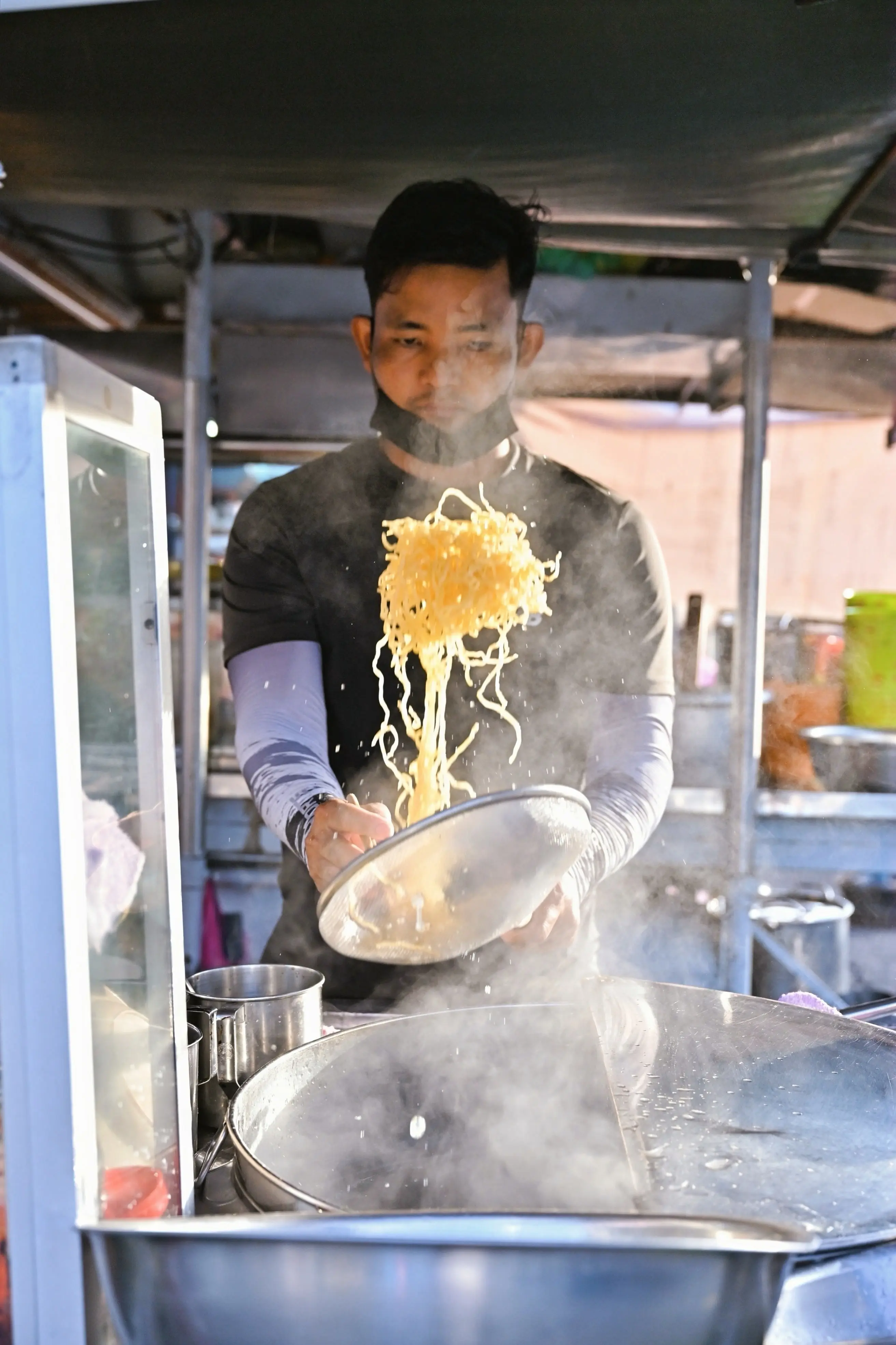
Penang's food reputation is built on noodles. Char kway teow, Hokkien mee, wan tan mee, laksa. Almost every well-known dish on the island is a noodle dish. When you are gluten-free, this sounds like a problem. Kuey teow is made from rice flour, so the noodle itself is safe. The gluten hides in the soy and oyster sauce, so ask for “no dark soy” at the stall.
It is less of a problem than you think. Most of Penang's noodles are made from rice flour. The dishes that are unsafe use wheat-based soy sauce, not wheat noodles. And the island's South Indian food tradition, which is built on rice and lentils, gives you plenty of naturally gluten-free options.
The Rice-Based Foundation
The carbohydrate base of most Penang meals is rice or rice noodles. The flat rice noodles used in char kway teow are made from rice flour and water. The thick rice vermicelli in Penang laksa is rice-based. The thin vermicelli in Hokkien mee is rice-based. The noodles themselves are not the problem.
The problem is the sauce. Soy sauce contains wheat. Dark soy sauce contains wheat. Oyster sauce contains wheat. And many stalls use these as base ingredients. A dish that looks safe because it uses rice noodles may still be unsafe because of the seasoning.
The solution is to eat at stalls where the seasoning is simple and transparent. The stalls that work for gluten-free eating in Penang are the ones where you can see exactly what goes into the wok.
Naturally Gluten-Free Penang Dishes
Penang laksa (assam laksa) is one of the safest GF options on the island. The broth is made from mackerel, tamarind, lemongrass, galangal, torch ginger flower, and chilli. No soy, no wheat. The noodles are thick rice vermicelli. The toppings are shredded cucumber, pineapple, onion, mint, and shrimp paste. The shrimp paste is potentially a concern for severe coeliacs due to cross-contamination risk, but the dish itself contains no wheat ingredients. Ask at the stall. The laksa at Air Itam is the best-known version, and the broth there is made without any wheat products.
Nasi kandar is rice with curries. The rice is plain steamed rice. The curries are based on coconut milk, spices, and tamarind. No wheat. The fried chicken at nasi kandar stalls is coated in rice flour batter. The vegetable curries use no thickeners. This is one of the safest GF meals in Penang. Line Clear Restaurant and Nasi Kandar Beratur are both reliable.
Nasi lemak is coconut rice with sambal, fried chicken, egg, and anchovies. The rice is coconut and pandan. The fried chicken coating is rice flour. The sambal is chilli, shallots, and tamarind. No wheat. The version at the Gurney Drive hawker centre is a safe option. Skip the keropok (prawn crackers), which are wheat-based.
Satay is grilled chicken or beef skewers with peanut sauce. The marinade is turmeric, lemongrass, and chilli. The peanut sauce is ground peanuts, chilli, tamarind, and palm sugar. No wheat. The satay stall at the Batu Ferringhi night market is a good option. Ask the vendor about the sauce ingredients.
Thosai and idli are South Indian rice and lentil cakes. Thosai is crispy and thin. Idli is soft and steamed. Both are naturally gluten-free. They are served with sambar (lentil soup) and coconut chutney. The stalls in Little India along Lebuh Pasar are the best in George Town for these.
Grilled seafood at the Batu Ferringhi night market is naturally GF. Fish, prawns, and squid are marinated in a spice paste and grilled over charcoal. No flour, no soy, no wheat. The grilled stingray with sambal is the standout.
Kuih (traditional cakes) are made from rice flour, coconut milk, and palm sugar. Most kuih is naturally GF. Kuih lapis, kuih seri muka, and kuih dadar are all safe. The kuih stalls at Chowrasta Market have a good selection. Ask the vendor to confirm no wheat flour is used.
Hawker Centres That Understand Coeliac Needs
The hawker centres in George Town vary in their awareness of dietary requirements. The larger, more tourist-facing centres are more likely to have encountered coeliac visitors before.
Gurney Drive Hawker Centre is the most tourist-friendly. The vendors here have served international visitors for decades. Some understand coeliac requirements. Ask directly and they will tell you what contains wheat. Go early (5 PM) when the vendors are less busy and more willing to talk through the menu.
Chowrasta Market is less tourist-oriented but the food is more traditional and less processed. The nasi kandar and laksa stalls here use simple ingredients. The risk of hidden wheat is lower because these stalls cook from scratch.
Batu Ferringhi Night Market is the best option for evening eating. The grilled seafood, satay, and kuih stalls are all naturally GF. The vendors here are accustomed to tourists with specific needs.
Private Tour Recommendation for Severe Allergies
If you have coeliac disease or a severe gluten allergy, Penang is manageable but requires caution. The risk of cross-contamination is real. Woks are used for multiple dishes. Soy sauce splashes. The same tongs handle wheat and rice noodles.
For severe allergies, a private food tour is the safest approach. A local guide who knows the vendors and can communicate your needs directly eliminates the uncertainty. The guide can confirm ingredients, watch the cooking, and take you to stalls where the risk is lowest.
The Simply Enak private food tours in Penang are designed for visitors with dietary restrictions. The guide works with vendors who have been vetted for their ability to handle specific requirements. The stalls are chosen because they use simple, transparent ingredients. You do not need to explain your diet to every vendor yourself.
The Questions to Ask
In Malay: "Ada guna tepung gandum?" (Does this contain wheat flour?) In English at tourist-facing stalls: "No wheat, no soy sauce?" The universal gesture: Point at the dish, then point at your stomach, shake your head, and say "sakit" (pain). Most vendors will understand.
The Bottom Line
Penang is a good city for gluten-free eating if you stick to the right dishes. Nasi kandar, nasi lemak, Penang laksa, satay, grilled seafood, thosai, and idli are all naturally gluten-free. The risk is in soy sauce-based dishes, not in the rice noodles that Penang is known for.
The key is knowing which stalls to go to and which questions to ask. With a little preparation, you can eat your way through Penang without compromise.
Love what you just read?
Stay in the loop, add Simply Enak to your Google favorites so you never miss a story.
Ready to taste these flavours yourself?
Join a Simply Enak food tour in Kuala Lumpur or Penang. Small groups, local guides, authentic experiences since 2011.
Pauline
Simply Enak Food Experiences
Pauline has been guiding food tours in Malaysia since 2011, sharing hidden gems and family-run stalls with travellers from around the world.
You might also like