Where to Eat in Kuala Lumpur: A Beginner's Guide
Where to Eat in Kuala Lumpur: A First-Timer's Guide You step out of the train at a KL station and the first thing that hits you is the smell.
Where to Eat in Kuala Lumpur: A First-Timer's Guide
You step out of the train at a KL station and the first thing that hits you is the smell. Not pollution. Not humidity. Somewhere in the immediate vicinity, someone is wok-frying noodles over a charcoal fire, and the smoke drifts across half the city block. Kuala Lumpur does not ease you into its food scene. It throws you straight into it. The question for a first-time visitor is not whether you will eat well. It is how to decide among the hundreds of stalls, shops, and restaurants competing for your attention.
This guide covers five key neighbourhoods, the dishes you should order in each, and the specific stalls or restaurants that have earned their reputations over years of consistent cooking.
Bukit Bintang: The Tourist Hub with Real Food
Bukit Bintang is KL's commercial core. Shopping malls, hotels, nightlife. The street food here is clustered around Jalan Alor, a lane that turns into a hawker strip every evening. Critics say Jalan Alor has become too tourist-focused. The food is still good if you know where to go.
The stall near the 7-Eleven at the city-end of Jalan Alor has been cooking char kway teow over a charcoal fire for over thirty years. Flat rice noodles, dark soy sauce, prawns, cockles, bean sprouts, egg. The charcoal gives it a smokiness that gas burners cannot replicate. RM 8.
Satay on Jalan Alor comes from multiple stalls. The one on the corner opposite Wong Ah Wah uses a peanut sauce with visible crushed nuts and a tamarind tang. Order a mix of chicken and beef.
Across from Jalan Alor, the hawker centre at Lot 10 on Jalan Bukit Bintang has a selection of KL's best hawker dishes under one roof. The Hokkien mee stall here is among the most consistent in the city. Thick yellow noodles stir-fried in dark soy sauce with pork, squid, and a rich stock that clings to every strand.
Chinatown: Petaling Street and the Surrounding Lanes
KL's Chinatown centres on Petaling Street, a covered market that sells everything from counterfeit handbags to fresh herbs. The food stalls are on the side streets, not the main market aisle.
Jalan Hang Lekir has the best wantan mee in the city. Restoran Soo Kee has been serving it since the 1970s. Thin egg noodles with a dark soy dressing, slices of barbecued pork with caramelised edges, and wantan dumplings in a clear broth. RM 7.
The cendol stall at the corner of Jalan Hang Lekir and Jalan Petaling has been shaving ice since the 1960s. The green rice flour jelly is made with pandan. The coconut milk is fresh. The gula melaka syrup comes from Malacca. RM 3.50.
Jalan Tun H S Lee runs parallel to Petaling Street and has Kedai Kopi Lai Fatt, a kopitiam that has been serving kaya toast and kopi-o since the 1950s. The coffee is made with a traditional sock filter. The toast is grilled over charcoal in the back alley. Order a set: toast with butter and kaya jam, two half-boiled eggs, and a cup of kopi.
Brickfields: Little India in KL
Brickfields is the neighbourhood around KL Sentral station. It is KL's Indian food hub, home to the city's best banana leaf rice, roti canai, and mamak stalls.
Vishal Food Catering on Jalan Thambipillay serves banana leaf rice that sets the standard. Steamed rice on a banana leaf, three vegetable dishes, a scoop of dhal, and your choice of chicken curry, fish curry, or fried fish. You eat with your right hand. The curry is refillable. RM 8 to RM 12 depending on your protein.
For roti canai, the stall at the Brickfields morning market on Jalan Tun Sambanthan makes each piece to order. The dough is stretched thin, folded, and griddled with ghee until the outside is crispy and the inside is layered and soft. Eat it with dhal curry on the side. RM 1.50.
The mamak restaurants in Brickfields stay open late. Restoran Nagasari Cendol on Jalan Berhala serves roti tissue, a paper-thin cone of crispy roti dusted with sugar and condensed milk. It is dessert, not a main. Order it after your banana leaf rice.
Kampung Baru: Malay Food in a Village Setting
Kampung Baru is a traditional Malay neighbourhood in the middle of KL. Low-rise wooden houses and street stalls surrounded by skyscrapers. The food here is halal, family-recipe, and made for regulars who eat here every week.
Jalan Haji Hussein is the main food street. The nasi lemak stall opposite the mosque is the local benchmark. Coconut rice steamed with pandan, sambal, fried anchovies, peanuts, boiled egg, and fried chicken. The sambal is made fresh each morning. RM 5.
Satay in Kampung Baru comes on smaller skewers than Jalan Alor, but the marinade penetrates deeper. Stall 63 at the Kampung Baru night market uses coconut milk and turmeric for the chicken, a sweet soy marinade for the beef.
Rot john is a specialty here that is hard to find elsewhere. A split baguette filled with minced meat and egg, toasted on a flat grill until the bread is crispy on the outside and the egg is set. Served with onion and chilli sauce. The stall at the night market entrance sells out by 9 PM.
Bangsar: Modern KL Eating
Bangsar is a residential area southwest of the city centre. It has the highest concentration of good casual restaurants in KL, ranging from Japanese to Italian to modern Malaysian.
The Bangsar evening market at Jalan Telawi Satu has a satay stall that draws queues from 5 PM onwards. The skewers are grilled over coconut husks, which gives the meat a subtle sweetness. RM 1 per stick.
For a modern take on Malaysian food, stop by one of the restaurants along Jalan Telawi that serve nasi lemak with fried chicken cooked to order. The version here uses chicken that is brined overnight before frying, resulting in meat that stays moist under the crispy skin.
Making Your First Visit Count
KL's food scene rewards people who walk. The best meals are rarely in the first restaurant you see. Walk a block past the busy stretch. If a stall has a queue of local office workers at lunch, join it. If a restaurant is half empty in a neighbourhood full of people, skip it.
Carry small notes. Most street vendors do not accept cards. RM 50 in small bills covers an evening of eating for two. Bring tissues or wet wipes. Malaysian hawker stalls rarely provide napkins.
Time your eating to the hawker schedule. Breakfast stalls close by 11 AM. Lunch stalls operate from 11:30 AM to 2:30 PM. Dinner stalls set up around 5 PM and run until midnight. Show up at 4 PM and you will find empty tables and empty woks.
If you want a guided introduction to KL's food neighbourhoods in a single afternoon, the Simply Enak Kuala Lumpur food tour covers Bukit Bintang, Chinatown, and Kampung Baru with a local guide who knows the stalls by name.
Love what you just read?
Stay in the loop, add Simply Enak to your Google favorites so you never miss a story.
Ready to taste these flavours yourself?
Join a Simply Enak food tour in Kuala Lumpur or Penang. Small groups, local guides, authentic experiences since 2011.
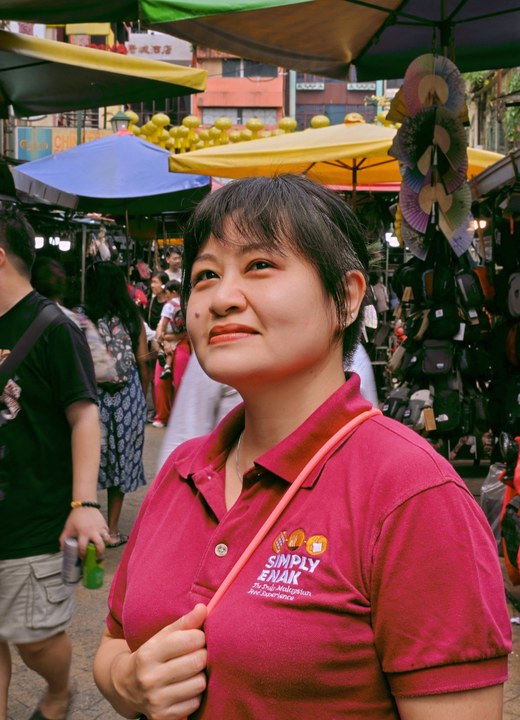
Pauline
Simply Enak Food Experiences
Pauline has been guiding food tours in Malaysia since 2011, sharing hidden gems and family-run stalls with travellers from around the world.
You might also like