Jain Food in Penang: How to Eat Strictly Root-Vegetable-Free
The Jain Food Guide to Penang You have just arrived in George Town. The smells from the hawker stalls hit you at every corner.
The Jain Food Guide to Penang
You have just arrived in George Town. The smells from the hawker stalls hit you at every corner. You want to try everything. But your Jain dietary requirements mean you cannot eat most of what you see.
No onion. No garlic. No root vegetables. No animal products of any kind. In a city where belacan, lard, and garlic are standard ingredients, finding food that fits can feel impossible.
It is not impossible. Penang has a Jain community, small but established, and the Indian vegetarian restaurants in George Town understand the requirements. The options are limited. You will eat simpler meals than your travelling companions. But you will eat well.
George Town's Little India: Your Base for Jain Eating
The area around Lebuh Pasar and Lebuh Penang is George Town's Little India. This is where the Indian community shops, eats, and gathers. It is also where you find the restaurants that understand Jain dietary needs.
Sri Ananda Bahwan on Lebuh Penang is a vegetarian restaurant with a large menu. The kitchen can prepare Jain versions of most dishes if you request it. The staff understand the difference between "no onion as a preference" and "no onion as a dietary requirement." They have been serving the local Jain community for years.
Order the thali: a complete meal with rice, dal, vegetable curries, roti, and a sweet dish. Tell the staff you need Jain preparation. They will adjust the curries to remove onion and garlic. The dal is made without onion at the base. The vegetable curry changes daily but can be prepared Jain-style on request.
Restoran KRSMA on Lebuh Pasar is another option. This is a smaller restaurant with a simpler menu, but the kitchen is more flexible. The owner understands Jain requirements personally. The thosai here is made with rice and lentil batter that contains no onion or garlic. The plain thosai and the rava thosai (made with semolina) are both safe. The idli is steamed rice and lentil cakes, naturally Jain-friendly. Order them with sambar and coconut chutney. Confirm the sambar is made without onion.
Woodlands Restaurant on Lebuh Penang serves North Indian and South Indian vegetarian food. The menu has a separate section for Jain dishes. The paneer dishes, dal, and vegetable curries in the Jain section are prepared without onion or garlic. The naan and roti are made without these ingredients. This is one of the few restaurants in Penang where you can order from a dedicated Jain menu without explaining your requirements.
What to Order at Indian Vegetarian Restaurants
Idli: Steamed rice and lentil cakes. The batter is fermented and contains no onion or garlic. It is naturally Jain-friendly. Order it with sambar and coconut chutney. Confirm the sambar is onion-free.
Plain thosai and rava thosai: Rice and lentil crepe. The plain version and the semolina version contain no onion or garlic. The masala thosai is stuffed with potato. If you avoid root vegetables, order the plain thosai instead.
Vada: Deep-fried lentil doughnuts made from urad dal. At most South Indian restaurants in Penang, the vada batter contains no onion or garlic. They work for Jain eating.
Pongal: Savoury rice and lentil porridge seasoned with black pepper, cumin, curry leaves, and ghee. No onion, no garlic. Ask for it without ghee if you avoid dairy.
Chapati and roti: Unleavened flatbreads made from wheat flour and water. Naturally Jain-friendly. Ask for it dry (no ghee on the cooking surface).
Dal tadka: Cooked lentils. Ask for it without onion, garlic, or ghee. Most South Indian kitchens can prepare it this way.
Plain rice with vegetable curry: The simplest Jain meal. Rice is always safe. Ask for the vegetable curry to be prepared without onion or garlic. Most restaurants in Little India can do this.
What to Avoid
Nasi kandar is the best-known dish in Penang, but it is not Jain-friendly. The curries at nasi kandar stalls contain onion and garlic as a base. The serving spoons are shared across meat and vegetable dishes. Cross-contamination is guaranteed.
Banana leaf rice at most Indian restaurants uses ghee on the rice and onion in the vegetable curries. You would need to request Jain preparation specifically, and not all restaurants can do this.
Roti canai is made with ghee at Mamak stalls. The dough may contain eggs. Even vegetarian versions are rarely Jain-compatible.
Any Chinese hawker stall is a risk. Even 素食 (Buddhist vegetarian) stalls use onion and garlic. Only strict temple kitchens exclude the pungent roots, and these are rare in Penang's commercial 素食 scene.
Fried snacks at pasar malam may look vegetarian but often contain onion in the batter.
Temple Canteens: A Limited but Reliable Option
The Kek Lok Si Temple canteen in Air Itam serves vegetarian food made to Buddhist standards. Buddhist temple kitchens exclude the five pungent roots (onion, garlic, leeks, chives, spring onion). They also exclude all animal products. The canteen is a reliable option for Jain eaters, though you should confirm that no root vegetables are used in individual dishes.
The canteen serves a buffet during temple hours. Rice, stir-fried vegetables, mock meat dishes, and soups. The selection varies daily. The food is simple but safe. A plate costs around RM 5.
The Honest Truth
Jain eating in Penang is possible but limited. You will eat well at the Indian vegetarian restaurants in Little India. You will eat safely at the Kek Lok Si temple canteen. Beyond these options, you will struggle.
The cuisine that works for Jain eating in Penang is South Indian vegetarian. The cuisine that does not work is everything else. Malay food uses belacan. Chinese food uses onion and garlic. Indian-Muslim food uses onion and ghee. Even the Buddhist vegetarian food uses onion and garlic at most commercial stalls.
Private Tour Recommendation for Strict Compliance
For strict Jain compliance, a private food tour is the best approach. A local guide who understands Jain dietary requirements can take you to the restaurants that prepare food correctly and save you the effort of explaining your diet to every new vendor.
The Simply Enak team in Penang has experience with Jain dietary needs and knows which Little India vendors to visit. The guide can confirm the preparation methods, watch the cooking, and ensure your requirements are met. No translation needed, no uncertainty, just the food that actually works for you.
Bring a small card in Tamil and Malay explaining Jain requirements. It helps at restaurants where the English phrase "Jain preparation" may not be familiar to all staff.
Love what you just read?
Stay in the loop, add Simply Enak to your Google favorites so you never miss a story.
Ready to taste these flavours yourself?
Join a Simply Enak food tour in Kuala Lumpur or Penang. Small groups, local guides, authentic experiences since 2011.
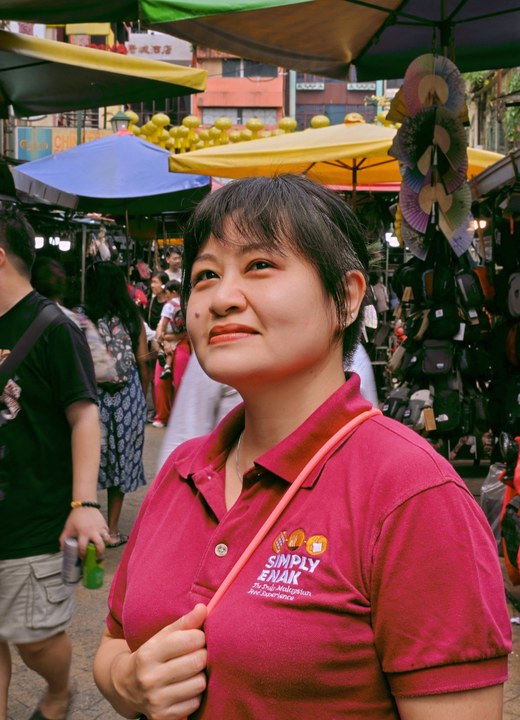
Pauline
Simply Enak Food Experiences
Pauline has been guiding food tours in Malaysia since 2011, sharing hidden gems and family-run stalls with travellers from around the world.
You might also like