Durian Season in Malaysia: When to Visit for the Best Fruit
Plan your durian trip to Malaysia. Peak season is June-August. Learn when to visit, where to find the best fruit, and what varieties are available by month.
Durian Season in Malaysia: When to Visit for the Best Fruit (2026 Guide)
Durian season in Malaysia runs from June to August, with the peak in July. This is when you'll find the widest variety, the best prices, and the freshest fruit. But the exact timing shifts depending on where you are in the country.
The Main Season: June to August
The biggest durian season falls between June and August. During these months, the orchards across Peninsular Malaysia are producing fruit at full capacity. This is when Musang King (Mao Shan Wang), Black Thorn, and D24 hit the markets in the largest quantities.
What this means for you:
- Best selection — Every major variety is available
- Lowest prices — Supply is high, so prices drop
- Freshest fruit — Direct from orchard, not stored or shipped
In KL, you'll see durian stalls appear overnight. One day a quiet street corner, the next a lineup of pickup trucks with the fruit loaded on the back. The vendors are usually farmers or their representatives, selling directly to cut out the middlemen.
Regional Variations
Durian doesn't ripen everywhere at the same time. The season moves through Malaysia in a rough arc from north to south.
Penang and Kedah — Season starts early, usually late May. Penang is famous for its Black Thorn and Hor Lor varieties. The Balik Pulau area, on the quieter side of the island, has orchards that open to visitors during peak season.
Pahang (Temerloh, Genting Highlands) — This is the durian heartland. Temerloh is known as Durian Town and hosts a festival every July. The season here runs from June through August, with some late harvests into September.
Selangor (Bukit Tinggi, Fraser's Hill) — These highland areas produce durian from June to August. The cooler climate means slightly later ripening than the lowlands.
Johor — The southernmost state has a slightly different cycle. Some varieties ripen earlier in May, others later into September. Johor is also where you'll find Golden Phoenix, a bitter, watery variety that's grown from old trees.
Secondary Seasons
Malaysia has a smaller durian season from November to January. This is less predictable and produces fewer varieties. You'll still find fruit, but the selection is narrower and the prices are higher.
There's also a brief window in March to April in some areas, but this is the leanest period. Don't plan a trip around this if durian is your main goal.
What to Expect by Month
June — Season kicks off. Penang leads the way. KL markets start seeing durian trucks. Prices are still relatively high as supply ramps up.
July — Peak season. Everything is available. Prices are at their lowest. This is when Temerloh hosts its durian festival. If you can only visit one month, make it July.
August — Season winds down. Some late varieties are still available, but the best selections are gone. Prices start climbing again.
How to Time Your Trip
If durian is your priority, plan for mid-June to mid-August. This gives you the widest window to catch the fruit at different stages of the season.
Stay at least three days. Durian is seasonal and weather-dependent. A storm can knock fruit from the trees early, or delay the harvest. Having a few days gives you flexibility.
Where to Eat Durian During Season
KL:
- Jalan Alor — several durian stalls appear every June
- Taman Connaught — vendors park their trucks and sell straight from the back
- Bangsar — some stalls set up during peak season
Penang:
- George Town — the durian strip along Jalan Burma and surrounding streets
- Balik Pulau — visit the orchards directly
- Night markets — durian is a regular feature during season
Temerloh:
- The town itself is the destination. Every shop and roadside stall sells durian during season.
Price Guide
Durian prices vary by variety and size. Here's what to expect during peak season:
- Musang King (Mao Shan Wang) — RM 30–50 per fruit, RM 60–80 per kilogram
- D24 — RM 20–35 per fruit
- Black Thorn — RM 40–60 per fruit
- Durian kampung — RM 10–20 per fruit
Prices drop during peak season but rise sharply once supply dwindles.
How to Pick a Good Durian
A few things we teach on tour, and use ourselves:
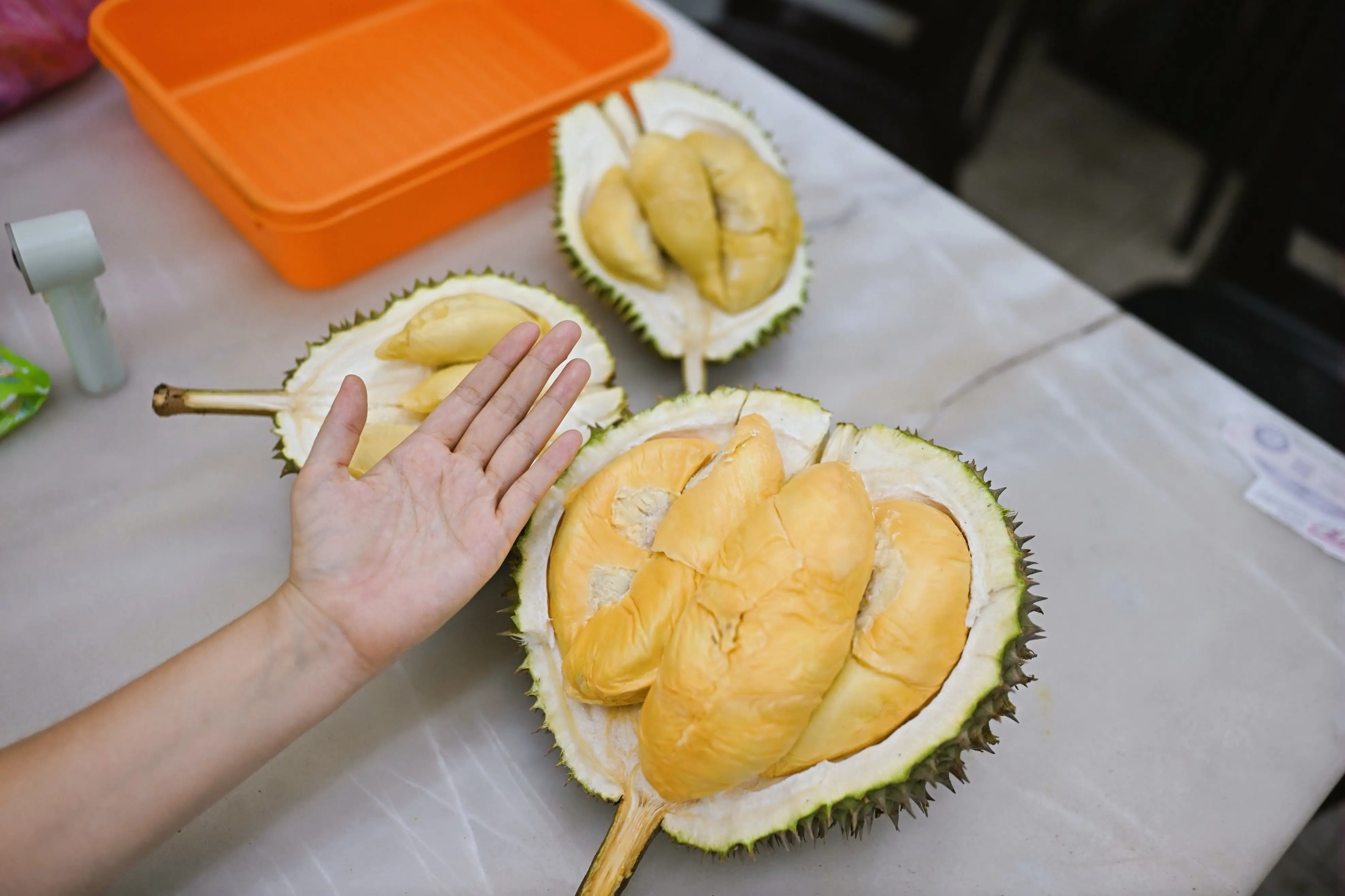
- Shape — rounder fruit has more flesh per shell than long, oval ones.
- Stem — a thick, short stem usually means thick flesh inside.
- Aroma — a strong smell even unopened is a good sign. If you can't smell it, it's likely underripe.
- The knock test — tap the shell. A deep, hollow sound means it's ready; a high, tight sound means it's not.
- Never buy pre-opened — the flesh loses its aroma and sweetness once exposed. Let the vendor crack it in front of you.
A Note on Durian and Hotels
Durian is banned in most hotels, shopping malls, and public transport across Malaysia. This isn't a cultural preference — it's enforcement. Hotels will ask you to dispose of the fruit before checking in. Some have lockers where you can store durian for a few hours.
If you're staying in a hotel and want to eat durian, buy it from a vendor outside and eat it nearby. Don't take it back to your room.
Ready to Taste Durian at Its Best?
If you're visiting during durian season and want to experience it properly, book the Penang Night Food Tour — it includes a durian tasting stop at a trusted vendor in George Town. Your guide explains the varieties, helps you choose, and makes sure you get the best fruit for your budget.
Love what you just read?
Stay in the loop, add Simply Enak to your Google favorites so you never miss a story.
Ready to taste these flavours yourself?
Join a Simply Enak food tour in Kuala Lumpur or Penang. Small groups, local guides, authentic experiences since 2011.
Pauline
Simply Enak Food Experiences
Pauline has been guiding food tours in Malaysia since 2011, sharing hidden gems and family-run stalls with travellers from around the world.
You might also like