Was sind malaysische Kueh und welche solltest du probieren?
Malaysische Kueh sind gedämpfte und gebackene Süßigkeiten aus Reismehl, Kokos und Pandan. Dieser Guide stellt 12 Sorten vor, von Kueh Lapis bis Ondeh-Ondeh.
TLDR: Malaysische Kueh sind kleine gedämpfte, gebackene oder gekochte Süßigkeiten aus Reismehl, Kokosmilch, Palmzucker und Pandan. Dieser Guide stellt 12 Sorten vor: von kueh lapis (Regenbogen-Schichtkuchen) bis ondeh-ondeh (grüne Kügelchen mit flüssigem Kokosblütenzucker). Du erfährst, woraus jedes besteht, wann Malaysier sie essen und welche du zuerst probieren solltest.
Was genau sind malaysische Kueh?
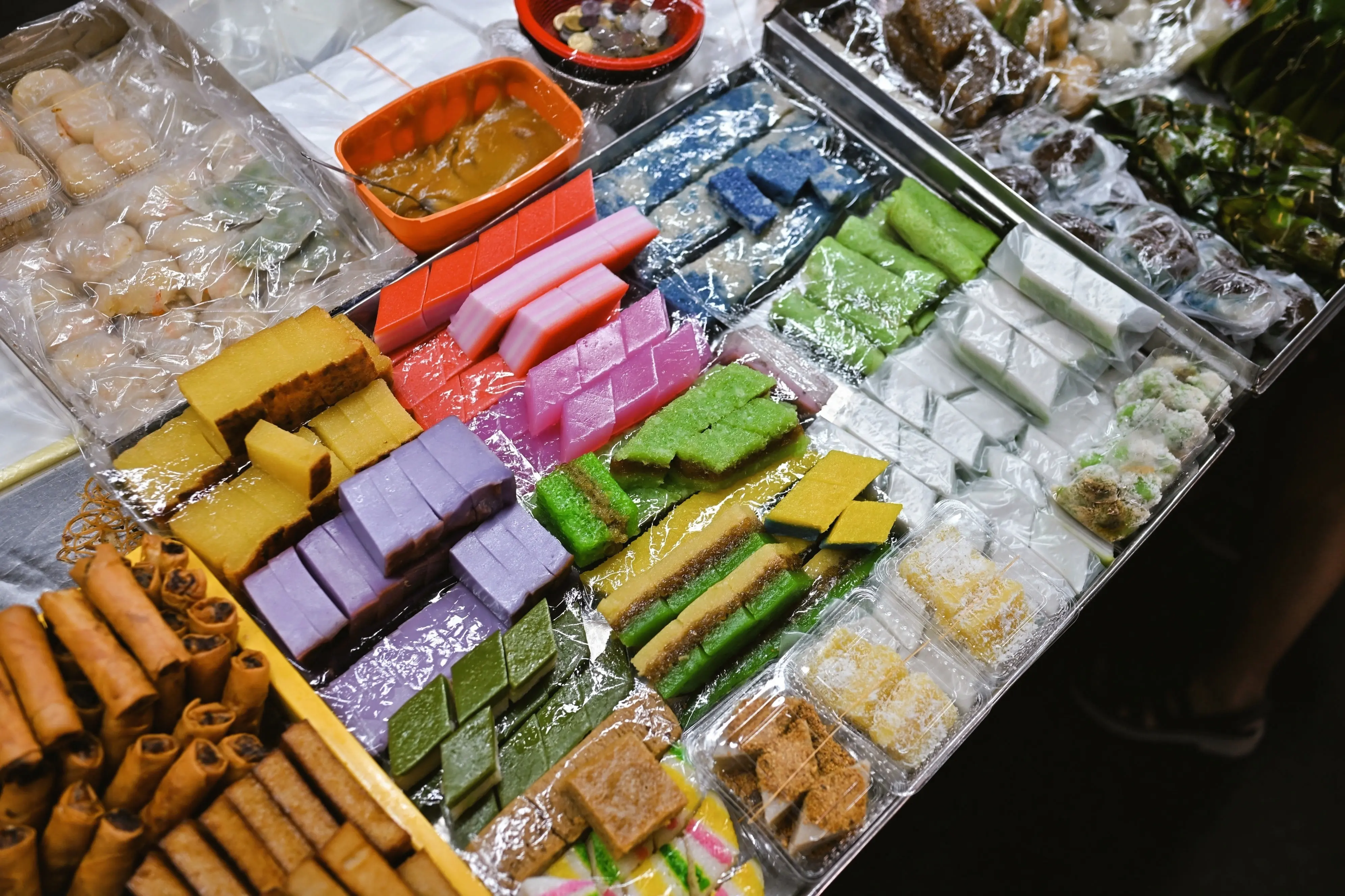
Malaysische Kueh (auch kuih geschrieben) sind kleine, bunte Süßigkeiten und Snacks, hauptsächlich aus Reismehl, Tapiokamehl, Kokosmilch, Palmzucker (gula melaka) und Pandanblättern. Du findest sie auf Morgenmärkten, an Straßenständen, in Kopitiams und auf Buffets bei jedem großen malaysischen Fest. Sie werden zum Frühstück gegessen, als Nachmittagssnack zum Tee und in der Festzeit zu Hari Raya, Chinesischem Neujahr und Deepavali.
Anders als westliche Desserts, die auf Butter, Weizenmehl und raffiniertem Zucker basieren, beruhen Kueh auf Kokos und Reis. Dadurch sind viele von Natur aus glutenfrei und einige vegan. Die Texturen reichen von kaubar und elastisch (kueh lapis, kueh kosui) bis mürbe und custardartig (kueh bakar, bingka ubi). Auf unseren Kuala Lumpur Food Tours halten wir an einem Kueh-Stand, wo du vier oder fünf Sorten auf einmal probieren kannst.
Was ist Kueh Lapis und wie wird es gemacht?
Kueh lapis ist ein mehrschichtiger gedämpfter Kuchen aus Reismehl und Tapiokamehl, vermischt mit Kokosmilch und Zucker. Jede Schicht wird einzeln eingegossen und gedämpft, etwa vier Minuten pro Schicht. Ein typisches Kueh lapis hat acht bis zwölf Schichten, oft abwechselnd rosa und weiß, aber es gibt auch Regenbogenversionen.
Das Essritual ist so wichtig wie die Zubereitung. Man zieht jede Schicht einzeln ab, bevor man sie isst. Die Textur ist fest, leicht kaubar und nach Kokos. Laut der Peranakan Association of Singapore ist dieses Kueh seit Generationen ein Grundnahrungsmittel in peranakischen (Straits Chinese) Haushalten in Penang und Malakka.
Kueh lapis ist ein mehrschichtiger gedämpfter Kuchen aus Reismehl, Tapiokamehl, Kokosmilch und Zucker, bei dem jede Schicht einzeln eingegossen und etwa vier Minuten gedämpft wird. Die typische Version hat 8 bis 12 Schichten in wechselnden Farben. Es ist ein Grundnahrungsmittel der peranakischen Nyonya-Küche in Penang und Malakka, wo es seit Generationen hergestellt wird.
Was macht Ondeh-Ondeh so beliebt?
Ondeh-ondeh sind kleine grüne Kügelchen aus Klebreismehl und Pandansaft, gefüllt mit flüssigem gula melaka (Palmzucker) und in frisch geriebenem Kokos gewälzt. Wenn du hineinbeißt, fließt flüssiger Palmzucker in den Mund. Dieser Moment ist der ganze Punkt.
Die äußere Schicht ist kaubar, ähnlich wie japanisches Mochi, aber mit deutlich malaysischem Pandangeschmack. Viele Versionen sind von Natur aus vegan und glutenfrei. Sie werden als Tee-Snack gegessen, bei Festen und zum Fastenbrechen im Ramadan. Der Schlüssel zu guten ondeh-ondeh ist, dass die gula melaka-Füllung im Teig flüssig bleibt, ohne beim Kochen auszulaufen.
Was ist Kueh Talam?
Kueh talam ist ein zweischichtiges Dampfdessert. Die untere Schicht ist grün, aus Reismehl, Erbsenmehl und Pandansaft. Die obere Schicht ist weiß und cremig, aus Kokosmilch, Reismehl, Maisstärke und Salz. Der Kontrast zwischen süßer, kaubarer grüner Basis und salziger, cremiger Kokosdecke macht dieses Kueh besonders.
Der Name „talam" bezieht sich auf das Metalltablett (talam), in dem es traditionell gedämpft wurde. Nach dem Dämpfen wird es in Rauten oder Quadrate geschnitten. Laut Rezepten malaysischer Hobbyköche ist die Pandan-Version der Klassiker, moderne Varianten nutzen Rosen-, gula melaka- oder Maisgeschmack.
Was ist Angku (Schildkrötenpanzer-Kueh)?
Angku ist ein chinesisch-malaysisches Kueh in Schildkrötenpanzerform, meist orange oder rot, aus Klebreismehl und Süßkartoffelteig. Die Füllung ist süße, glatt gestampfte Mungbohnenpaste. Jedes Stück wird in eine Holzform gedrückt, um das Panzermuster zu erzeugen, dann auf Bananenblättern gedämpft.
Angku hat in der chinesisch-malaysischen Kultur eine besondere Bedeutung. Es wird als Opfergabe nach Gebeten im Tempel serviert und bei Feiern an Familie und Freunde verschenkt, besonders zum einmonatigen Jubiläum eines Babys. Die kaubare, leicht süße Hülle passt zur dichten Mungbohnenfüllung. Es schmeckt gut zu heißem kopi O (schwarzem Kaffee) oder teh O (schwarzem Tee).
Was sind Kueh Kosui und Kueh Lompang?
Kueh kosui (auch kueh lompang genannt) sind gedämpfte Reismehlküchlein, die in kleinen Teetassenformen gegart werden. Der Teig besteht aus Reismehl, Tapiokamehl, Laugewasser, Zucker und Pandan. Nach dem Dämpfen wird in jedes Küchlein oben eine kleine Vertiefung gedrückt und mit gesalzenem, frisch geriebenem Kokos gefüllt.
Die Textur ist elastisch und leicht klebrig. Der gesalzene Kokosbelag gleicht das süße Küchlein darunter aus. Diese gehören zu den häufigsten Kueh auf den pasar pagi (Morgenmärkten) Malaysias, verkauft aus gestapelten Metalldämpfern vor 10 Uhr.
Wann sollte man Kueh Sago essen?
Kueh sago wird aus Sago-Perlen hergestellt, die mit Pandan, Zucker und Wasser gekocht werden, bis sie durchscheinend sind, dann in eine mit Bananenblatt ausgelegte Form gepresst werden. Nach dem Kühlen wird es in mundgerechte Stücke geschnitten und in gesalzenem geriebenem Kokos gewälzt. Die Farbe ist oft leuchtend rot von Lebensmittelfarbe, natürliche Versionen sind weiß.
Dieses Kueh wird kalt serviert, was es zu einem Favoriten auf Partys, Feiern und zum Nachmittagstee macht. Die Textur ist geleeartig und erfrischend. Es gehört zu den einfachsten Kueh, weshalb es oft auf Schulbasaren, Community-Treffen und Open Houses zu Hari Raya auftaucht.
Was ist Kueh Bakar (gebackenes Kueh)?
Kueh bakar ist ein blumenförmiges, gebackenes Kueh mit goldener, leicht angesengter Oberseite und weichem, cremigem Custard-Kern. Aus Kokosmilch, Pandan, Eiern und Mehl, wird es je nach Region auch bingka bakar oder kueh kemboja genannt. Die Ränder sind fest und karamellisiert, während der Kern weich bleibt.
Anders als die meisten Kueh wird kueh bakar im Ofen gebacken. Die Bräunung oben ist beabsichtigt und erwünscht. Es wird warm oder bei Zimmertemperatur in Keilen serviert. Die Kombination aus Kokosmilch und Pandan gibt ihm einen reichen, aromatischen Geschmack, der als Dessert und süßer Snack gleich gut funktioniert.
Was ist Pulut Tai-Tai mit Kaya?
Pulut tai-tai (auch pulut tekan) ist ein Nyonya-Kueh aus Klebreis, der in Kokosmilch mit Schmetterlingserbsenblüten gedämpft wird, die dem Reis seine markante blaue Farbe geben. Der Reis wird in eine Form gepresst, in Stücke geschnitten und mit kaya (Kokos-Ei-Marmelade) serviert.
Das Blau kommt vollständig von bunga telang (Schmetterlingserbsen)-Blüten, nicht von Lebensmittelfarbe. Der Kaya-Dip ist süß und kokosig. Dies ist ein klassisches Nyonya-Tee-Kueh aus Penang und Malakka, das Technik erfordert, um die Reistextur richtig hinzubekommen: weich genug, um zusammenzuhalten, fest genug, um sauber zu schneiden.
Was ist Kueh Cara Berlauk?
Kueh cara berlauk sind herzhafte Kueh in Takoyaki-Kugelform. Ein Teig aus Mehl und Kokosmilch wird in eine spezielle Formpfanne gegossen, dann kommt eine gewürzte Hackfleischfüllung hinzu. Der Teig setzt sich um die Füllung und ergibt einen herzhaften Becher mit knusprigem Rand und weichem Kern.
Die Füllung wird mit Zwiebeln, Knoblauch und Currypulver gekocht. Der Kontrast zwischen mildem, crêpeartigem Teig und intensiv gewürztem Hackfleisch macht dieses Kueh auf Feiern zum Highlight. Süße Versionen gibt es auch, aber die herzhafte Version ist auf malaysischen Partys und Treffen verbreiteter.
Was ist Bingka Ubi (Maniok-Kuchen)?
Bingka ubi ist ein gebackener Maniokkuchen aus geriebenem Maniok, Kokoscreme, Eiern, Zucker und Kokosöl. Die Oberseite wird übergrillt, bis sie goldbraun ist. Das Innere ist dicht, kaubar und natürlich süß vom Maniok. Es ist glutenfrei und damit eines der wenigen Kueh, das jeder unabhängig von Ernährungseinschränkungen essen kann.
Dieses Kueh ist in Malaysia, Singapur und Indonesien verbreitet. Der Maniok wird roh gerieben und in den Teig gemischt, nicht vorgegart. Nach etwa 45 Minuten Backen bei 190 Grad Celsius wird die Oberseite mit Öl bestrichen und unter den Grill gelegt, um die typische goldene Kruste zu entwickeln.
Wie fängst du an, malaysische Kueh zu probieren?
Am einfachsten besuchst du einen Kueh-Stand auf einem Morgenmarkt oder in einem Kopitiam und kaufst eine gemischte Box. Eine kleine Auswahl von fünf bis sechs Stücken kostet unter RM10 und lässt dich Texturen und Geschmäcker direkt vergleichen. Starte mit ondeh-ondeh für den gula melaka-Effekt, kueh lapis für die Schichttextur und kueh talam für den süß-salzigen Kontrast.
In Kuala Lumpur führen die Gegend um den Central Market und die Stände in Chinatown eine große Auswahl. In Penang haben die Morgenmärkte an der Campbell Street und in Pulau Tikus eigene Kueh-Verkäufer. Für eine geführte Einführung enthalten unsere Food Tours eine Kueh-Verkostung, bei der du lernst, worauf du achten und wie du bestellst.
Häufig gestellte Fragen
Was ist der Unterschied zwischen kueh und kuih?
Es ist dasselbe. „Kueh" ist die übliche Schreibweise im malaysischen Englisch, „kuih" folgt der standardmäßigen malaiischen Schreibweise. Beide bezeichnen kleine gedämpfte, gebackene oder gekochte Süßigkeiten aus Reismehl, Kokos und Palmzucker. Du wirst beide Schreibweisen auf Schildern und Speisekarten in ganz Malaysia sehen.
Sind malaysische Kueh glutenfrei?
Viele ja. Kueh aus Reismehl, Tapiokamehl und Klebreismehl enthalten kein Weizen. Kueh lapis, ondeh-ondeh, kueh kosui und bingka ubi sind alle von Natur aus glutenfrei. Einige Kueh wie apam enthalten jedoch Weizenmehl, frag also unbedingt nach, wenn du Zöliakie hast. Join our tours und sag uns vorher Bescheid, wenn du
Love what you just read?
Stay in the loop, add Simply Enak to your Google favorites so you never miss a story.
Ready to taste these flavours yourself?
Join a Simply Enak food tour in Kuala Lumpur or Penang. Small groups, local guides, authentic experiences since 2011.
Pauline
Simply Enak Food Experiences
Pauline has been guiding food tours in Malaysia since 2011, sharing hidden gems and family-run stalls with travellers from around the world.
You might also like