Malaysian Street Food: What to Eat and What to Skip
Malaysia's Street Food: A First-Timer's Guide You have heard that Malaysia has the best street food in Southeast Asia.
Pauline
Simply Enak
Malaysia's Street Food: A First-Timer's Guide
You have heard that Malaysia has the best street food in Southeast Asia. You have seen the photos: noodles tossed in giant woks over charcoal fires, satay skewers smoking on roadside grills, bowls of laksa that look like they were made by someone who has been doing this for forty years.
The photos are accurate. Malaysia's street food is that good. But for a first-time visitor, the scene can be overwhelming. There are three different culinary traditions. There are hawker centres and pasar malam and kopitiams. The ordering system is not always obvious. This guide breaks down how it all works.
The Three Culinary Traditions
Malaysian street food comes from three separate food systems that run alongside each other. Each one has its own neighbourhoods, its own ingredients, and its own signature dishes.
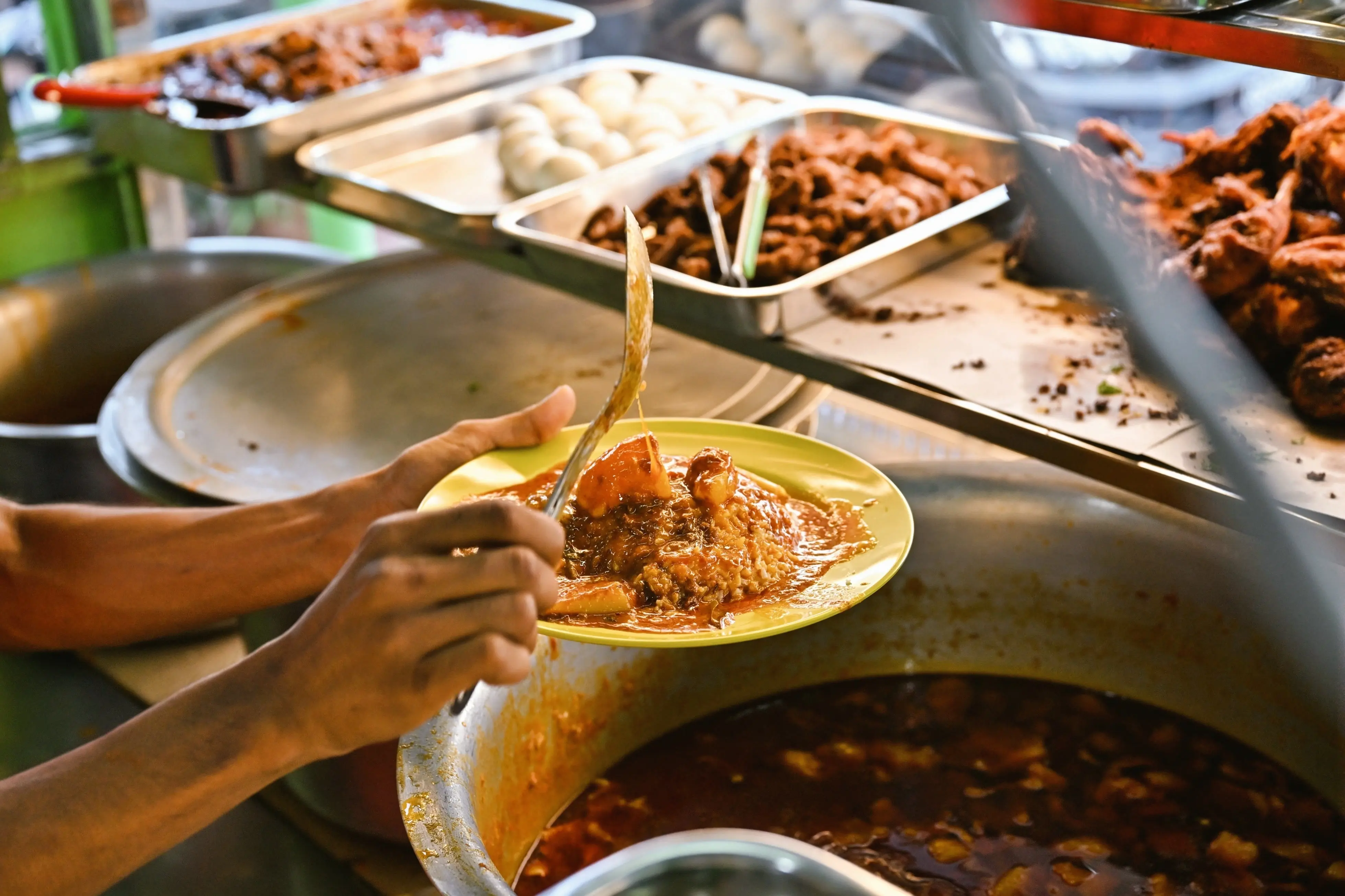
Malay food is the national cuisine. It is built on rice, coconut milk, chillies, and belacan (shrimp paste). The flavours are bold and layered: sweet from palm sugar, sour from tamarind, spicy from fresh and dried chillies. Nasi lemak is the national dish: coconut rice served with sambal, fried anchovies, egg, and cucumber. Satay is grilled meat skewers with peanut sauce. Rendang is slow-cooked beef in coconut milk and spices. Malay food is halal. You find it in Malay neighbourhoods like Kampung Baru in KL and at the Malay sections of hawker centres across the country.
Chinese food is the street food most visitors come for. It is based on noodles, soy sauce, and wok hei (the smoky flavour from a hot wok). Char kway teow is flat rice noodles stir-fried with prawns, cockles, egg, and bean sprouts. Hokkien mee is prawn noodle soup. Wan tan mee is egg noodles with BBQ pork and dumplings. Chinese food uses lard and pork extensively. Halal options exist but require certification. Chinese hawkers dominate the food courts and hawker centres in KL, Penang, and Ipoh.
Indian food is the third pillar. South Indian food dominates: thosai (rice and lentil crepes), idli (steamed rice cakes), and banana leaf rice. Indian-Muslim (Mamak) food adds roti canai, nasi kandar, and murtabak. The flavours are spice-forward: cumin, coriander, cardamom, curry leaves. Indian food is concentrated in the Little India neighbourhoods of every Malaysian city: Brickfields in KL, Lebuh Pasar in Penang.
Hawker Centres vs Pasar Malam
Malaysia has two types of street food venues, and they work differently.
Hawker centres are permanent or semi-permanent collections of stalls operating under a covered area. They open at set hours and serve the same vendors every day. You walk from stall to stall, order what you want, pay at each stall, and take the food to a central seating area. The best-known hawker centres are Gurney Drive in Penang, Jalan Alor in KL, and the Old Town food court in Ipoh. Hawker centres are reliable. The food quality is consistent because the vendors have been doing this for years.
Pasar malam are night markets that set up on a different street each day of the week. They are temporary: stalls arrive in vans, set up at 4 PM, and pack down by 10 PM. Pasar malam sell everything: prepared food, fresh produce, clothing, household goods. The food at pasar malam is more snack-oriented than hawker centre food: fried chicken, keropok (fish crackers), apam balik (pancakes), grilled corn. Each neighbourhood has its own pasar malam schedule. The food is less formal and cheaper than at hawker centres.
How to Order: The System Explained
Ordering at a Malaysian hawker centre follows a simple pattern.
At a hawker centre, find a table first. If the table has a number, note it. Walk to the stall that serves what you want. Point at what you want or say the name of the dish. If the vendor asks "makan sini" or "bawa pulang," they are asking if you are eating here or taking away. Say "makan sini" (eat here). Tell them your table number. They bring the food to your table. You pay at the stall after eating.
At pasar malam, the system is simpler. You walk along the row of stalls, point at what you want, and pay on the spot. Food is served in takeaway containers. Eat while walking or find a nearby bench.
At a kopitiam (coffee shop), you order drinks from the coffee stall and food from the individual food stalls. Each food stall operates independently. You order from each one separately. The drink stall owner usually collects payment for the drinks only. Pay the food stalls directly.
Street Food Etiquette
Malaysian street food etiquette is informal but has a few rules.
Use your right hand for eating. The left hand is considered unclean in Malay and Indian culture. If you are eating rice with your hands (banana leaf rice), use only your right hand. The thumb, index, and middle fingers work together to push the rice into your mouth. It takes practice.
Do not leave your chopsticks standing upright in a bowl of rice. It resembles incense sticks at a funeral. Lay them across the bowl or on the chopstick rest.
At a Mamak stall, accept the tissue (napkin) when offered. You will be charged for it, but it costs ten sen. It is part of the meal.
If a stall has a queue, join it. The queue means the food is good. Do not ask locals what is good at a stall. Watch what they order. The dish that most people are eating is the dish to order.
What to Drink
The standard street food drink is teh tarik: pulled milk tea, sweet and creamy. Kopi is strong black coffee with condensed milk. Limau ais is iced lime juice. Air suam is warm water, available at every stall.
Drinks are ordered from a separate drink stall at most hawker centres. The drink vendor will find you at your table. You do not need to get up.
Tipping
Tipping is not expected at Malaysian street food stalls. The RM 3 you pay for a bowl of laksa includes the service. If you want to leave small change, that is fine, but it is not required.
The Bottom Line
Malaysian street food is some of the best in the world because it has been developed by three separate communities over generations. Each tradition is worth exploring on its own terms. Start with one cuisine per meal. Try Malay food at lunch, Chinese food for dinner, and Indian food the next morning. The variety is part of what makes Malaysia special.
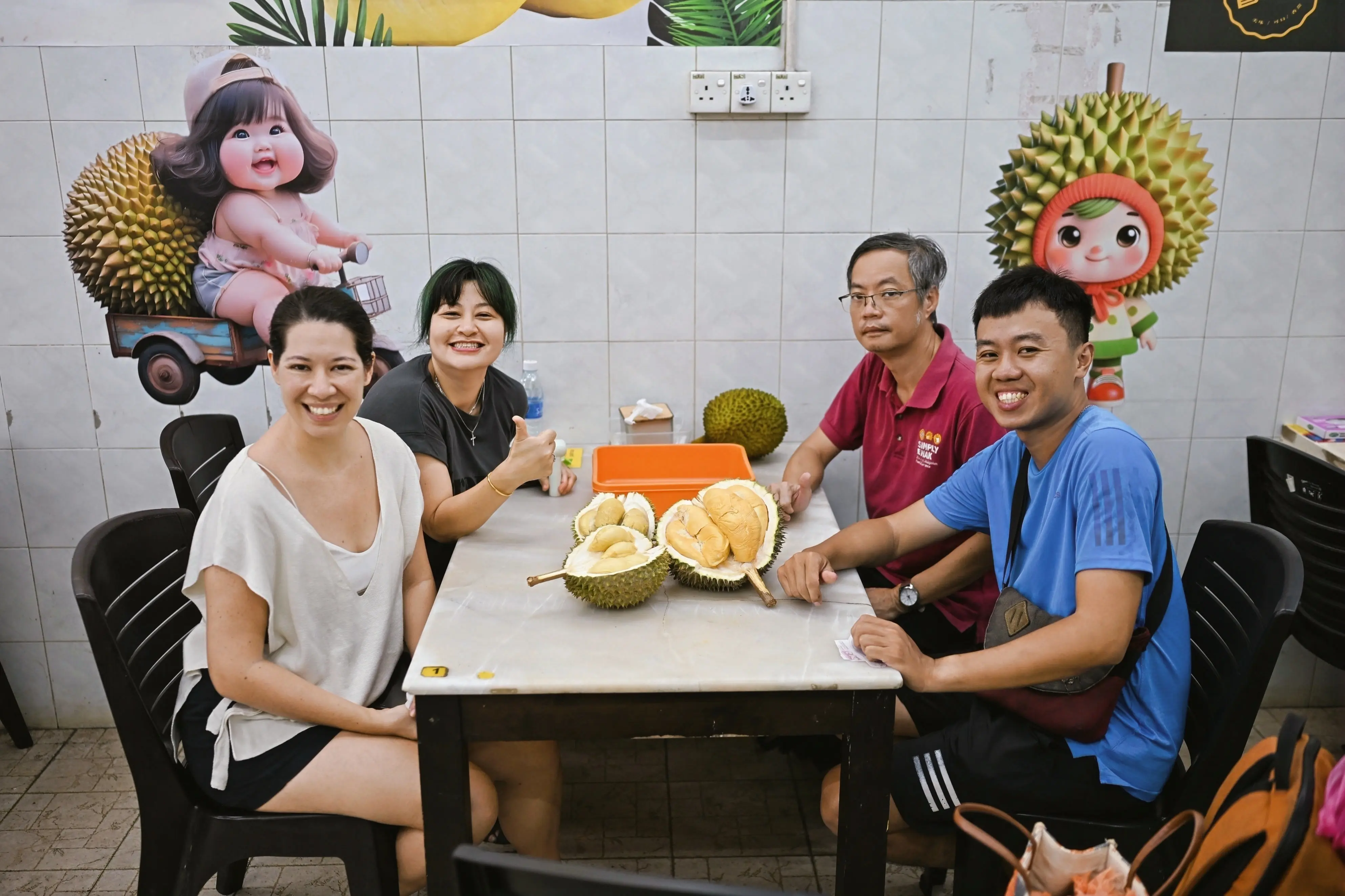
A local guide who knows the stalls and the vendors can help you navigate the scene faster. The Simply Enak food tours in Malaysia focus on the neighbourhoods where the street food is best and the vendors have been serving it longest. You will eat more in three hours than you could find on your own in a week.
Ready to taste these flavours yourself?
Join a Simply Enak food tour in Kuala Lumpur or Penang. Small groups, local guides, authentic experiences since 2011.
Pauline
Simply Enak Food Experiences
Pauline has been guiding food tours in Malaysia since 2011, sharing hidden gems and family-run stalls with travellers from around the world.
You might also like
Enjoyed this story? Browse all stories →