马来西亚人怎么做鸡蛋?10种方法带你了解
马来西亚的鸡蛋做法可不止煎蛋那么简单。带你了解10种烹饪方法。从搭配kaya的半熟蛋,到telur dadar和咸蛋黄酱。
TLDR: Malaysians eat an estimated 2.8 million eggs every single day, according to 2016 data from the Ministry of Agriculture. Malaysian egg dishes span half-boiled eggs dunked in soy sauce with kaya toast, butter prawns coated in hand-spun golden egg floss, and telur dadar folded over hot rice with sweet soy sauce. This guide covers 10 specific preparations, where to find them, and what makes each one distinct.
Why Do Malaysian Egg Dishes Matter?
Walk into any Mamak stall in Kuala Lumpur at 2am and you'll see eggs cracked into roti canai, flipped onto tosai, or poached soft and served with curry. Malaysian egg dishes and cooking methods go far beyond the standard English breakfast plate of scrambled, fried, or boiled. We're talking about eggs spun into golden floss, wrapped around fried rice, and slow-cooked with herbs until the shells turn brown.
The 2.8 million daily figure comes from Datuk Seri Ahmad Shabery Cheek, then Minister of Agriculture and Agro-based Industry, who cited it in 2016. Eggs are the most affordable protein source in Malaysia, and cooks across the country have built an entire vocabulary of preparations around them. If you want to understand Malaysian food culture, understanding how we cook eggs is a solid starting point.
On our Kuala Lumpur food tours, you'll taste at least three of these preparations in a single evening. We'll point them out so you know what to order next time.
What Is Half-Boiled Eggs With Kaya Toast?
This is the kopitiam breakfast that fuels most of Malaysia before 9am. Two eggs are lowered into hot (not boiling) water for about four minutes, then cracked into a shallow bowl. The whites are just barely set, the yolks still liquid. You season them with a few drops of light soy sauce and a shake of white pepper.
The pairing is kaya toast: white bread toasted crisp, spread thick with kaya (a coconut jam made from eggs, coconut milk, sugar, and pandan leaves) and a slab of cold butter. The contrast between runny egg, sweet coconut jam, and salted butter is what makes this combination endure from the 1920s Hainanese coffee shop tradition to today. The Hainanese coffee shop heritage is documented by the National Heritage Board of Malaysia.
Half-boiled eggs with kaya toast is the cornerstone kopitiam breakfast across Malaysia, served from before dawn at stalls like Yut Kee on Jalan Dang Wangi in Kuala Lumpur. The eggs are soft-poached in hot water for roughly four minutes until whites are barely set and yolks stay liquid, then seasoned with light soy sauce and white pepper and eaten alongside toasted white bread spread with kaya coconut jam and cold butter.
How Do You Make Butter Prawns With Egg Floss?
Butter prawns look like prawns rolled in golden thread. That golden thread is actually egg. The cook beats eggs and drips the mixture from a height into a wok of hot oil and butter, swirling continuously with a ladle. The egg strands into floss, crisps up, and gets tossed with prawns, curry leaves, and bird's eye chillies.
The result is sweet, salty, buttery, and spicy all at once. The egg floss melts on your tongue. This dish requires real hand-eye coordination: the dripping must be slow and from a specific height, and the swirling never stops until the mixture foams. According to aroma-based cooking references from Malaysian-Chinese home kitchens, the technique has been passed down through family recipes for decades.
What Makes Roti Tampal Different From Roti Telur?
Both are Mamak stall egg-and-bread combinations, but the preparation and eating experience differ significantly. Roti telur has the egg cracked into the dough before folding and griddle-cooking. Roti tampal takes a cooked roti canai and "pastes" (tampal in Malay) it on top of a sunny-side-up egg.
When you cut into roti tampal, the runny yolk streams out and mixes with dhal and curry. You soak it all up with the bread. It's richer and creamier than roti telur. The trick is asking for "telur setengah masak" (half-cooked egg) to guarantee that yolk stays runny.
What Is Telur Dadar and Why Is It a Staple?
Telur dadar is the Malaysian fried omelette, and it's the backbone of home cooking. Eggs are beaten and poured into hot oil so they puff up into a thick, crispy-edged disc. It's served over white rice with a drizzle of kicap manis (sweet soy sauce).
This is nasi bujang food: the working-class single-plate meal that costs a few ringgit. Two variations push it further. Telur bungkus wraps the omelette around a savoury mince filling. Telur bistik tops the omelette with a beefsteak-style onion gravy. Both show how Malaysians take a simple base and layer it with flavour.
Telur dadar is a puffy Malaysian fried omelette cooked in hot oil until crisp at the edges, served over rice with kicap manis sweet soy sauce. It functions as the staple working-class meal known as nasi bujang across Malay households and street stalls. Variations include telur bungkus, which wraps the omelette around spiced minced meat, and telur bistik, which tops it with beefsteak-style onion gravy.
What Are Telur Pindang and Telur Herba?
These are boiled eggs, but nothing like the ones on a Western salad. Both produce brown-shelled eggs with complex, aromatic interiors.
Telur herba is cooked in a Chinese herbal broth, the kind that fills the air in shopping malls when a herbal shop is nearby. The smell is instantly recognisable to anyone who grew up in Malaysia. Telur pindang uses a different spice blend without tea, slow-cooking the eggs until the shells darken and the whites absorb earthy, spiced notes. Telur pindang appears mainly at special occasions in Malay households, particularly weddings and feasts.
How Does Nasi Goreng Pattaya Use Eggs?
Nasi goreng Pattaya wraps a thin omelette around a plate of fried rice. Despite the Thai city in its name, this dish is more common in Malaysia than in Pattaya itself. The omelette is cooked flat, then folded over the rice so it forms a sealed parcel.
The visual is similar to Japanese omurice, but the taste is unmistakably Malaysian: the fried rice inside is seasoned with soy sauce, garlic, and chilli. Some stalls offer the same treatment with maggi goreng or kuey teow instead of rice. It's available at nearly every Mamak stall and hawker centre.
What Is Manicai With Eggs From Sarawak?
Manicai, also called pucuk manis or sweet leaf, is stir-fried with eggs in Sarawakian home cooking. The leaves are toxic raw and must be washed, juiced, and properly cooked. When prepared correctly, their initially bitter taste transforms into sweetness.
The eggs are scrambled into the stir-fried greens, creating a dish where bright yellow meets deep green. This is a vegetable dish that also delivers protein, common in Sarawak households and increasingly found at East Malaysian restaurants in KL.
What Is the Story Behind Century Egg Congee?
Century eggs are duck eggs preserved in a mixture of clay, ash, salt, quicklime, and rice hulls for several weeks to months. The preservation process turns the egg white dark amber and gelatinous, while the yolk becomes creamy and grey-green with a strong, earthy flavour.
In Malaysian Chinese cuisine, century eggs are chopped and stirred into plain rice congee (bubur). The congee is the mild base; the century egg provides the punch. It's served at breakfast, as a light meal, or when someone is feeling under the weather. The combination dates back centuries in Chinese culinary tradition and was brought to Malaysia by early Chinese immigrants.
How Do Salted Egg Dishes Work?
Salted eggs are duck eggs brined in salt or packed in salted charcoal for 20 to 30 days. The curing process solidifies the yolk and intensifies its richness. In Malaysian cooking, the cooked yolk is mashed and stir-fried with butter, curry leaves, and chillies to create a sauce for prawns, squid, or chicken.
The texture is sandy and rich, the flavour simultaneously salty and umami-forward. Salted egg yolk sauce has become one of the most popular flavour profiles in Malaysian Chinese cooking since the 2010s, appearing on everything from fried chicken to potato chips. The cured yolks can be steamed or baked before mashing, depending on the desired intensity.
Frequently Asked Questions
Are Malaysian eggs cooked differently from Western eggs?
Yes. Malaysian egg dishes use techniques like egg floss spinning (butter prawns), omelette wrapping (nasi goreng Pattaya), and herbal slow-boiling (telur pindang) that aren't found in standard Western cooking. Even "boiled" eggs come in five-plus variations in Malaysia, including telur goyang, telur herba, and telur setengah masak. Join a Simply Enak tour to taste several in one evening.
Where can I try half-boiled eggs with kaya toast?
Kopitiams across Malaysia serve this breakfast daily. In Kuala Lumpur, Yut Kee on Jalan Dang Wangi has been operating since 1928. In Penang, try Toh Soon Cafe on Campbell Street. The eggs arrive in a bowl, barely set, ready for soy sauce and white pepper. Read more about Penang breakfast spots.
What is the simplest Malaysian egg dish to cook at home?
Telur dadar. Beat two eggs, heat oil until it shimmers, pour the eggs in, and let them puff. Serve over rice with kicap manis. Total cooking time: under five minutes. The key is hot oil so the edges crisp and the centre stays thick.
Are century eggs safe to eat?
Yes. Despite their appearance, century eggs are preserved, not rotten. The curing process uses salt, ash, and alkaline materials. According to food safety references, they're safe to eat as-is or cooked into congee. The strong flavour is an acquired taste, so start with small pieces in plain congee.
What is the most popular egg dish at Mamak stalls?
Roti telur and roti tampal are the two most ordered egg dishes at Mamak stalls, available 24 hours. For egg on rice, nasi goreng pattaya is everywhere. If you want to try all three, our KL night food tour stops at stalls that serve them.
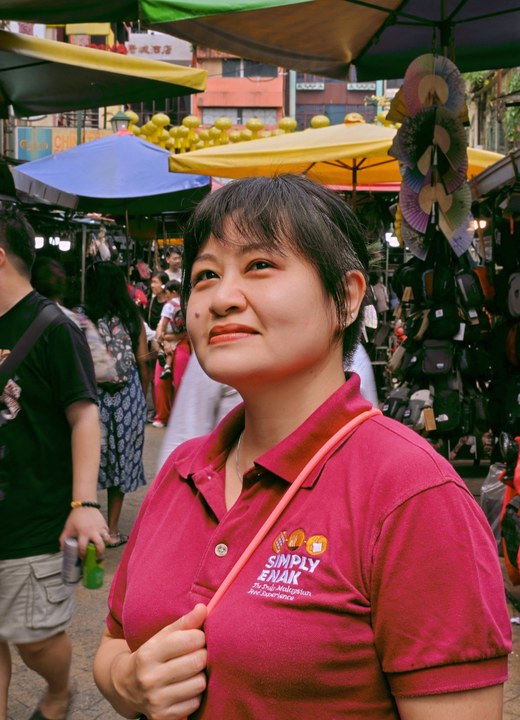
About the Author Pauline is the founder of Simply Enak, running food tours in Kuala Lumpur and Penang since 2014. She has personally visited over 200 hawker stalls and guided more than 5,000 guests through Malaysia's street food culture.
Love what you just read?
Stay in the loop, add Simply Enak to your Google favorites so you never miss a story.
Ready to taste these flavours yourself?
Join a Simply Enak food tour in Kuala Lumpur or Penang. Small groups, local guides, authentic experiences since 2011.
Pauline
Simply Enak Food Experiences
Pauline has been guiding food tours in Malaysia since 2011, sharing hidden gems and family-run stalls with travellers from around the world.
You might also like