
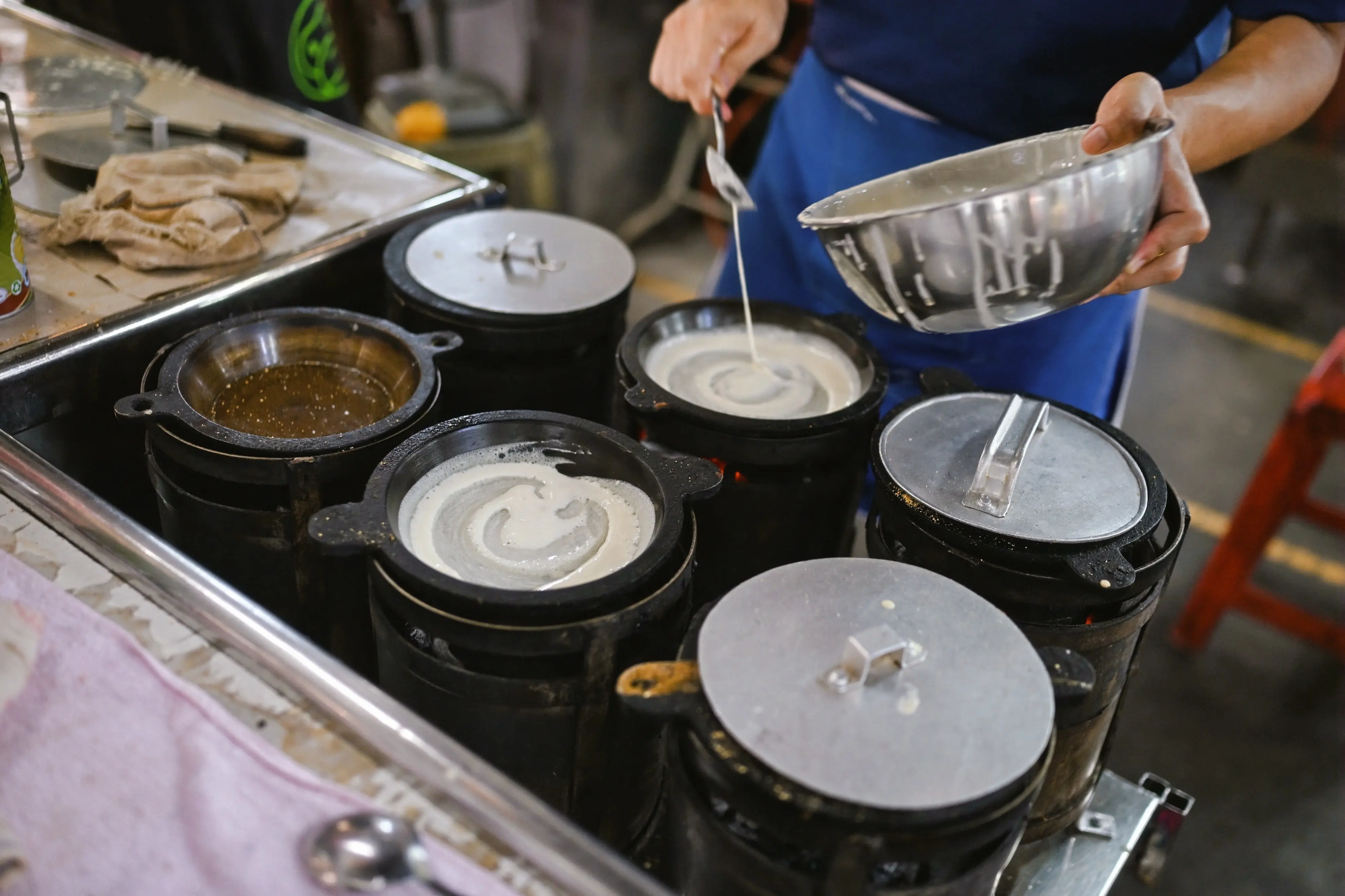
第一次来马来西亚应该吃什么?
给初次访客的马来西亚美食指南:吃什么、去哪吃、怎么点餐。带你吃遍马来西亚的 nasi lemak、roti canai、banana leaf rice 等等。
TLDR: This Malaysian food guide for first-time visitors covers 10 dishes you should try, from nasi lemak (coconut rice with sambal, anchovies, and peanuts) to roti canai (flaky flatbread with curry). You'll learn what each dish is, where it comes from in Malaysia's three-culture food landscape (Malay, Chinese, Indian), how to eat it, and what to expect at a typical hawker stall or mamak shop. Malaysia sits between Thailand and Singapore, and its food reflects centuries of trade and migration. Bring an appetite and a willingness to eat with your hands.
Why Is Malaysian Food So Hard to Categorise?
Malaysia sits between Thailand to the north and Singapore to the south, with a coastline along the South China Sea and the Strait of Malacca. For centuries, traders from India, China, the Middle East, and Europe passed through ports like Malacca and Penang. Many stayed. The result is a food landscape where Malay, Chinese, and Indian cooking sit side by side, sometimes on the same street, sometimes on the same plate. Nasi lemak, the national dish, has Malay roots but is sold at Chinese and Indian stalls too. Roti canai came from Indian Muslim (Mamak) cooks but is eaten by every community. Banana leaf rice is South Indian in origin but is a lunch staple across the country.
Malaysia's food reflects its geography and history. The country's position along the Strait of Malacca, one of the world's busiest shipping lanes, brought Indian, Chinese, Arab, and European traders to ports like Malacca and Penang from the 1400s onward. The three main communities (Malay, Chinese, Indian) each contributed cooking methods and ingredients, creating dishes that cannot be found in this exact form anywhere else. Nasi lemak, for example, combines Malay coconut rice with Indian-influenced sambal and Chinese frying techniques.
What Is Nasi Lemak and Why Is It Malaysia's National Dish?
Nasi lemak means "rich rice" in Malay. It is coconut rice cooked with pandan leaf and a pinch of salt, served with fried anchovies (ikan bilis), roasted peanuts, sliced cucumber, a hard-boiled egg, and sambal (a spicy chilli paste). The dish is believed to have roots in the Malacca Sultanate era (1400s-1500s), when the port city was a major trading hub. The five components are deliberate: each bite should combine the sweet rice, salty anchovies, crunchy peanuts, fresh cucumber, and fiery sambal.
You can find nasi lemak everywhere. Roadside stalls wrap it in banana leaf or brown paper for about RM2-3. Mamak restaurants serve it on a plate with fried chicken for RM8-12. Hotel buffets put it in silver chafing dishes. The strongest versions are usually the cheapest ones sold from stalls where the sambal is made fresh each morning.
Nasi lemak is Malaysia's national dish, consisting of coconut rice cooked with pandan leaf, served with fried anchovies, roasted peanuts, cucumber, boiled egg, and sambal. The name means "rich rice" in Malay. Originating during the Malacca Sultanate era, it is sold everywhere from roadside stalls (RM2-3 wrapped in banana leaf) to hotel buffets. The five components are meant to be eaten together in one bite for a mix of sweet, salty, crunchy, and spicy.
What Is Roti Canai and Where Did It Come From?
Roti canai is a flaky flatbread made from wheat flour, ghee, and water. The dough is kneaded, rested, then flipped and tossed in the air until it stretches thin. It is folded, slapped onto a hot iron plate, and fried till crisp. It is served with dhal (lentil curry) or any of a dozen curries at a mamak (Indian Muslim) shop. Roti canai came to Malaysia through Indian Muslim traders who settled in Penang and other port cities. The word "canai" may come from "Chennai," reflecting the South Indian connection.
Penang is widely regarded as the place to eat roti canai, with stalls along Transfer Road and in the Lorong Selamat area drawing daily queues. But you can find good roti canai in any Malaysian town. Order it plain (roti canai kosong) or with egg (roti telur), and eat it with your right hand, tearing off a piece and dipping it into the curry.
Roti canai is a flaky flatbread of Indian Muslim origin, made by tossing and stretching wheat dough thin, then frying it on a flat iron plate. It is served with dhal or curry at mamak shops across Malaysia. The dish is believed to have roots in South Indian cooking, brought by traders who settled in Penang and other port cities. Penang's Transfer Road area is known for its roti canai stalls, but strong versions exist in every Malaysian city.
What Is Banana Leaf Rice and How Do You Eat It?
Banana leaf rice is a South Indian meal served on a banana leaf instead of a plate. Rice is placed in the centre, with vegetable curries, dhal, papadum, and chutneys arranged around it. You eat it with your right hand, mixing rice with each curry and shaping it into a small ball before lifting it to your mouth. The banana leaf adds a subtle earthy aroma to the food.
The practice came to Malaya with South Indian workers in the early 1900s, many of whom worked on rubber estates. Eating on a banana leaf was practical: it was free, grew everywhere, and needed no washing up. Today, banana leaf restaurants in Kuala Lumpur (like those in Brickfields and Bangsar) offer the option of adding fried chicken, fish, or mutton to the standard vegetarian base.
Banana leaf rice is a South Indian meal served on a banana leaf, consisting of rice with vegetable curries, dhal, papadum, and chutneys. It arrived in Malaya with South Indian estate workers in the early 1900s. Diners eat with their right hand, mixing rice and curry. In Kuala Lumpur, banana leaf restaurants in Brickfields (KL's Little India) offer versions with added meat dishes for RM12-20.
What Desserts Should First-Time Visitors Try in Malaysia?
Two desserts define Malaysian sweet culture: ais kacang and cendol. Both are built on shaved ice, which makes them essential in Malaysia's tropical heat.
Ais kacang (also called ABC, for Air Batu Campur) is a mound of shaved ice topped with sweet corn, red beans, groundnuts, grass jelly, and drizzled with rose syrup and condensed milk. Every spoonful reveals a different layer underneath the ice. A bowl costs RM4-7 at most hawker centres.
Cendol is simpler: shaved ice with green jelly noodles (made from rice flour and pandan leaf), coconut milk, and palm sugar (gula melaka). The combination of cold coconut milk and deep, caramel-like palm sugar is something you will not find in Western desserts. Penang and Malacca are the two cities most famous for cendol, with stalls on Penang Road and Jonker Street respectively drawing long queues.
For dessert in Malaysia, two shaved ice dishes are essential: ais kacang (shaved ice with sweet corn, red beans, peanuts, grass jelly, rose syrup, and condensed milk) and cendol (shaved ice with green pandan jelly noodles, coconut milk, and gula melaka palm sugar). Both cost RM4-7 at hawker centres. Penang Road and Jonker Street in Malacca are known for the country's most-visited cendol stalls.
What Is Kuih and Where Do You Buy It?
Kuih (or kueh) are bite-sized snacks made from rice flour, glutinous rice, coconut, palm sugar, and pandan. They come in vivid colours: green from pandan, blue from butterfly pea flower, orange from sweet potato, brown from gula melaka. You will find them at morning markets, roadside stalls run by older women (mak cik), and in glass cases at neighbourhood coffee shops. A piece costs between RM1 and RM3.
Common types include kuih lapis (layered steamed cake), ondeh-ondeh (green balls filled with liquid gula melaka, coated in coconut), kuih talam (two-layered coconut and pandan cake), and seri muka (glutinous rice topped with a pandan custard). Kuih is eaten at breakfast, at tea time, and as a snack any time of day. The three communities (Malay, Chinese, Indian) each have their own versions, so the variety across the country is enormous.
Kuih are bite-sized Malaysian snacks made from rice flour, coconut, palm sugar, and pandan leaf. Common varieties include ondeh-ondeh (coconut-coated balls with liquid gula melaka centre), kuih lapis (steamed layered cake), and seri muka (glutinous rice with pandan custard). They are sold at morning markets and roadside stalls for RM1-3 each, with Malay, Chinese, and Indian versions varying across the country.
What Should You Know About Eating at a Hawker Stall?
| Tip | What It Means |
|---|---|
| Follow the queue | A long line of locals means the food is good and fresh. Tourist-trap stalls rarely have queues. |
| Eat with your hands | For Malay and Indian food, use your right hand. For Chinese food, use chopsticks or a spoon. |
| Bring cash | Most hawker stalls do not accept cards. Keep small notes (RM1, RM5, RM10) ready. |
| Share tables | At busy food centres, sharing a table with strangers is normal. Do not leave bags on empty chairs. |
| Order in Malay | Pointing works, but a few words help: "satu" (one), "dua" (two), "pedas sikit" (a little spicy). |
When eating at Malaysian hawker stalls, follow the local queue, bring cash (most stalls do not accept cards), and be prepared to share tables at busy food courts. For Malay and Indian food, eating with your right hand is expected. Useful Malay words: "satu" (one portion), "pedas sikit" (slightly spicy), "tidak pedas" (not spicy). A meal at a hawker stall typically costs RM5-12.
How Spicy Is Malaysian Food and What If You Cannot Handle Chillies?
Malaysian food ranges from mild to very spicy. Sambal, the chilli paste served with nasi lemak and many Malay dishes, can be fiery. Indian curries vary. Chinese stir-fries are generally milder unless they list "pedas" on the menu. If you cannot handle heat, ask for "tidak pedas" (not spicy) or "kurang pedas" (less spicy). Most stalls can adjust. Charcoal pills or antacids can help if your stomach is not used to the spices. Start with milder dishes like Hainanese chicken rice or ban mian (handmade noodles) before working up to asam pedas or sambal-heavy dishes.
Malaysian food ranges from mild (Hainanese chicken rice, ban mian noodles) to very spicy (asam pedas, sambal-based dishes). Visitors who cannot handle chillies can ask for "tidak pedas" (not spicy) or "kurang pedas" (less spicy). Sambal, the chilli paste served with many dishes, is the most common source of heat. Those unaccustomed to spicy food should start with Chinese stir-fries before trying Malay sambal dishes.
How to Experience Malaysian Food as a First-Time Visitor
If you have two or three days in Malaysia, here is a simple plan:
Day 1 (Kuala Lumpur): Start with nasi lemak at a morning stall for breakfast. For lunch, find a banana leaf restaurant in Brickfields. In the evening, sit down at a mamak shop for roti canai and teh tarik (pulled tea). Walk through a night market (pasar malam) for skewered satay and kuih.
Day 2 (Penang or Malacca): If you can travel, head to Penang for char kway teow (wok-fried flat noodles) and assam laksa (sour and spicy fish noodle soup). Stop at Penang Road for cendol. Or visit Malacca for chicken rice balls and Jonker Street cendol.
Day 3 (local neighbourhood): Skip the tourist restaurants. Walk into any coffee shop (kopitiam) where locals are eating. Order whatever the table next to you is having. This is how you'll find the food that guidebooks miss. For more regional eating tips, see our Johor Bahru local food guide.
If you want a guided introduction rather than figuring it out alone, Simply Enak runs food walks in Kuala Lumpur that take you through the dishes above with a local who knows the cooks and the stories behind each stall.
Frequently Asked Questions
Is Malaysian street food safe for foreigners? Yes. Stalls with high turnover cook food fresh throughout the day. Look for stalls where locals queue, as this means ingredients move quickly. Avoid stalls where cooked food sits uncovered for long periods. When in doubt, start with freshly cooked items like roti canai or char kway teow, which are made to order. For a guided walk through KL's safest and most rewarding stalls, join a Simply Enak food tour.
What is the difference between Malaysian and Thai food? Malaysian food relies more on coconut milk, dried chillies, and spices like star anise, cardamom, and cinnamon (reflecting Indian and Middle Eastern influence). Thai food uses more fresh herbs like lemongrass, galangal, and kaffir lime leaves, with a sharper sweet-sour-salty balance. Malaysian food is generally richer and less sour than Thai food. For more on regional flavour profiles, see Tourism Malaysia's cuisine overview.
How much does a meal cost in Malaysia? A plate of nasi lemak at a stall costs RM2-3. Roti canai is RM2-3 per piece. A banana leaf rice meal is RM12-20. A plate of char kway teow is RM8-12. A meal at a mid-range restaurant runs RM25-40 per person. Malaysia is significantly cheaper than Singapore for comparable food. You'll find more budget tips in our Johor Bahru food guide.
Do I need to tip in Malaysia? No tipping is expected at hawker stalls or coffee shops. At sit-down restaurants, a 10% service charge is usually added to the bill. If no service charge appears, rounding up is appreciated but not required.
Can vegetarians eat easily in Malaysia? Yes. Indian restaurants (especially those marked "pure veg") offer extensive vegetarian menus. Chinese coffee shops often serve vegetable stir-fries and tofu dishes. Look for the word "sayur" (vegetable) on signs. Buddhist vegetarian restaurants, marked with a swastika or the word "su" in Chinese, are common in larger cities. Learn more about Malaysia's cultural food landscape in our chef movement article.
About the Author Pauline is the founder of Simply Enak, running food tours in Kuala Lumpur and Penang since 2014. She has guided thousands of first-time visitors through Malaysia's street food culture, from mamak shops in KL to hawker stalls in Penang, helping people eat where locals eat.
Love what you just read?
Stay in the loop, add Simply Enak to your Google favorites so you never miss a story.
Ready to taste these flavours yourself?
Join a Simply Enak food tour in Kuala Lumpur or Penang. Small groups, local guides, authentic experiences since 2011.
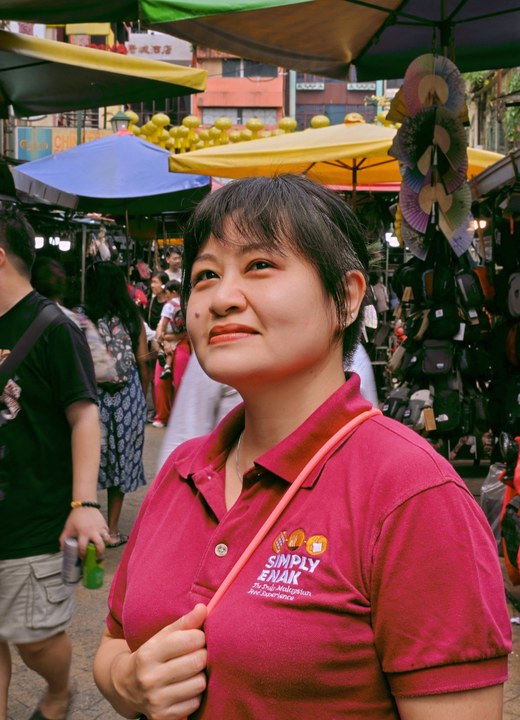
Pauline
Simply Enak Food Experiences
Pauline has been guiding food tours in Malaysia since 2011, sharing hidden gems and family-run stalls with travellers from around the world.
You might also like