The Hidden Meat Problem: Why Vegetarians Need to Be Careful in KL
Updated June 2026: Our guides still hear this question every week. Here is the latest advice for vegetarian visitors.
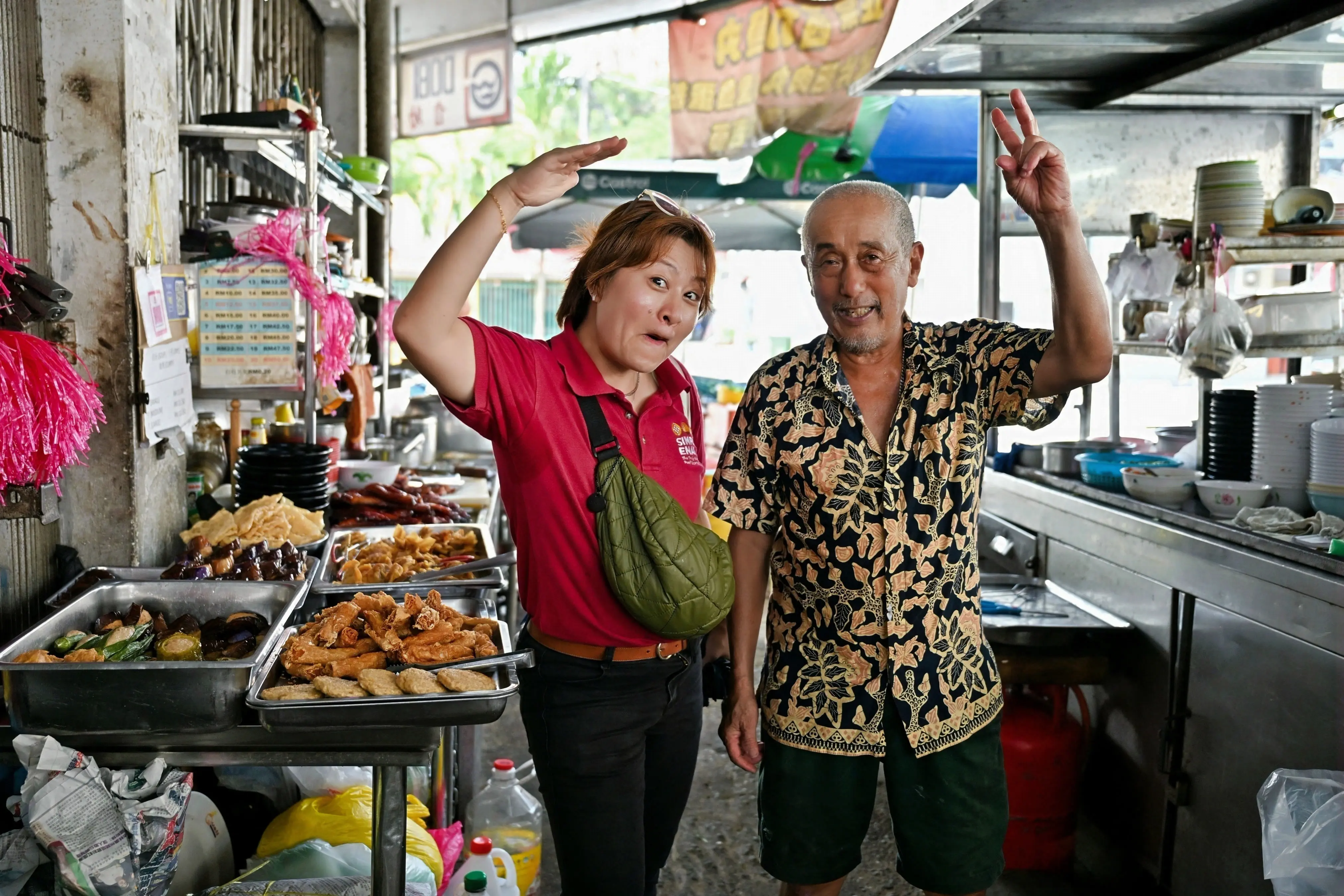
Updated June 2026: Our guides still hear this question every week. Here is the latest advice for vegetarian visitors. TL;DR: Ordering vegetables at a mixed hawker stall in KL doesn't make your meal vegetarian. Belacan (shrimp paste) is in almost every Malay vegetable dish. Lard is the default cooking fat at many Chinese stalls. Broths are usually pork-based. Oyster sauce is on almost every plate of Chinese gree --- Here's something that surprises almost every vegetarian visitor to KL. You sit down at a hawker stall. You point to the vegetable dish. It looks perfectly innocent: kangkung, stir-fried with chilli and garlic. No meat in sight. What you can't see is the belacan. Belacan is fermented shrimp paste. It goes into the wok before the vegetables do, and it's in a huge proportion of Malay vegetable dishes. Sambal belacan is to Malaysians what ketchup is to the West: ubiquitous, invisible if you don't kn If you're vegetarian and eating at mixed hawker stalls in KL, this is the guide you need. We've been navigating this for 14 years, and we want to save you the discovery. --- What Is Belacan, and Why Is It Everywhere? Belacan is a fermented shrimp paste made from tiny dried shrimp, compressed into blocks and aged until pungent and deeply savoury. It is one of the foundational flavours in Malay cooking, used the way a French cook uses butter or an Italian cook uses olive oil: as the base that everything else is bu The most famous example is kangkung belacan: stir-fried water spinach with shrimp paste. The name literally tells you what's in it. But most visitors don't read the name. They see a plate of greens and assume it's safe. Belacan also goes into sambal, which is served alongside almost every Malay dish. It's in nasi goreng. It flavours the broth in some laksa varieties. It seasons the chilli sauces at mixed stalls. You often can't taste it as seafood, the fermentation transforms it into something deeper, smokier, more At a dedicated 素食 Buddhist stall, none of this is an issue. At a mixed Malay hawker stall, it's worth asking every time. --- The Lard Question at Chinese Stalls Chinese hawker cooking has its own hidden ingredient: pork lard. Lard gives Chinese stir-fries a rich, aromatic quality that vegetable oil can't replicate. Many Chinese hawkers use it by default, even for vegetable dishes. The most famous example is char kway teow: flat rice noodles stir-fried in a blazing hot wok. The smoky, charred flavour comes partly from the A plate of stir-fried kailan or tofu at a mixed Chinese stall may have been cooked in lard, even if no meat appears on the plate. Then there's oyster sauce. Oyster sauce is made from oyster extract and is the default sauce for Chinese-style greens across Malaysia. It's in the glossy sauce on your gai lan. It's in the dipping sauce beside your tofu. It's often added without anyone t Vegetarian oyster sauce does exist and is common at Buddhist 素食 stalls. At mixed Chinese stalls, the default is the real thing. --- Which Dishes Are Most Likely to Catch You Out? Kangkung belacan, stir-fried water spinach. Almost always contains shrimp paste, even at non-Malay stalls. Nasi goreng, fried rice. Usually seasoned with belacan, oyster sauce, or anchovies. Vegetarian versions exist only at 素食 stalls. Char kway teow, flat noodles, very often cooked in lard with prawns and lard croutons mixed through. Vegetable soups, the broth at a mixed hawker stall is almost always pork-based or chicken-based, even if vegetables are the only solid ingredient. Chinese greens (gai lan, kailan, bayam), default sauce is oyster sauce, default cooking fat is often lard. Laksa, the broth contains dried shrimp, prawn paste, or seafood stock in most versions. Vegetarian laksa is available but specific to certain stalls. Sambal, virtually any sambal at a Malay stall contains belacan. Even served on the side, it came from the same wok. --- How Do You Actually Navigate This? The safest approach: eat at stalls built for vegetarians, not mixed stalls that try to accommodate you. Look for 素食 (sù shí) signs in Chinese script. These stalls use vegetable oil, mushroom-based sauces, and no belacan. The whole kitchen is set up for vegetarian cooking. At Indian vegetarian restaurants, the kitchen is built around a completely different tradition. No lard. No belacan. Ask about eggs and dairy, but you don't have to worry about shrimp paste or pork. At Malay hawker stalls, the phrase to know is: "Tak mahu belacan, tak mahu ikan", no belacan, no fish. Some vendors can accommodate this; many cannot, because the belacan goes into the base sambal before individual orders are cooked. It's worth asking, and most stall owners will tell you honestly if At mixed Chinese stalls, ask "Tak guna lard?" (No lard?) and "Ada sos tiram?" (Is there oyster sauce?). Some vendors have vegetable oil and vegetarian oyster sauce available. Many don't. The stalls where you can eat freely without asking every question are the Buddhist 素食 stalls and Indian vegetarian places. Our Chow Kit Market tour takes you through both, so you can see, smell, and taste the difference in a single morning. --- Why This Isn't Anyone's Fault It's worth saying clearly: vendors using belacan and lard aren't trying to catch you out. These ingredients are part of how Malaysian cooking has worked for generations. The concept of "vegetarian" as a dietary default, where you'd expect any restaurant to accommodate you, is a relatively recent idea. In the hawker context, "vegetables" means no meat on the plate. The cooking medium and Knowing this changes how you navigate it. You're not looking for vendors who forgot to mention something. You're looking for the kitchens that were built around a different tradition from the start: the Buddhist 素食 stalls, the Indian vegetarian places, the temple canteens that have been feeding vege That's exactly what we show people on our tours in Kuala Lumpur. Not how to negotiate with mixed stalls, but how to find the stalls that already work beautifully for you. --- Frequently Asked Questions Is belacan in all Malay vegetable dishes? Not every single one, but most. Belacan goes into sambal, which is the base sauce for a huge number of Malay vegetable dishes. Kangkung belacan, nasi goreng, and most stir-fried Malay vegetables contain it. At 素食 stalls, belacan is never used. How do I ask a vendor if there's belacan in a dish? Say "ada belacan?", is there belacan? Most vendors will answer honestly. If they're not sure, they'll say so. At dedicated 素食 stalls, you don't need to ask at all. Is char kway teow vegetarian? Almost never at a mixed stall. The classic version is made with lard, pork lard croutons, prawns, and sometimes cockles. Vegetarian char kway teow exists at Buddhist 素食 stalls, made with vegetable oil and no seafood. Can I ask Chinese hawker stalls to cook without lard? Some can and will. Others use lard as part of the base preparation and can't separate it from individual orders. It's always worth asking, but the most reliable option is a 素食 stall where the whole kitchen runs on vegetable oil. Do Indian vegetarian restaurants in KL use belacan or lard? No. South Indian and Tamil vegetarian cooking has its own tradition that does not include belacan, lard, or pork-based ingredients. These restaurants are a safe option for vegetarians, though it's worth asking about eggs and dairy depending on your needs. Frequently Asked Questions What is belacan and why should vegetarians care? Belacan is fermented shrimp paste used as a base in many Malay dishes, including sambal. It is not vegetarian. Many dishes labelled "vegetable" at Malay stalls use belacan, so always ask before ordering. Is lard commonly used in Chinese Malaysian cooking? Lard (pork fat) is used in many traditional Chinese Malaysian dishes, especially fried noodles and vegetables. Some stalls have switched to vegetable oil, but it is always worth asking. How do I find stalls that are genuinely vegetarian? Look for 素食 (sù shí) signs at Chinese stalls. At Indian stalls, ask directly about eggs, ghee, and dairy. Our vegetarian food tours take you to verified spots so you do not have to worry. --- Want a stress-free vegetarian food tour? Check our vegetarian-friendly tours.
Love what you just read?
Stay in the loop, add Simply Enak to your Google favorites so you never miss a story.
Ready to taste these flavours yourself?
Join a Simply Enak food tour in Kuala Lumpur or Penang. Small groups, local guides, authentic experiences since 2011.
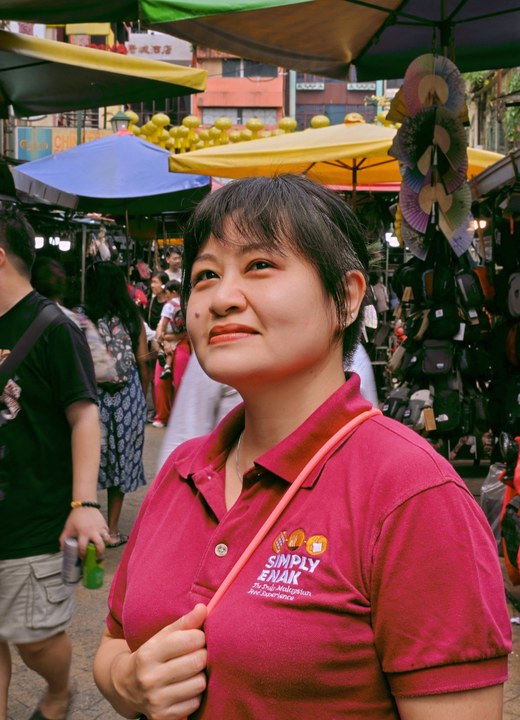
Pauline
Simply Enak Food Experiences
Pauline has been guiding food tours in Malaysia since 2011, sharing hidden gems and family-run stalls with travellers from around the world.
You might also like