Durian in Malaysia: Types, Season and Where to Eat
Musang King, D24, kampung durian: how to pick, when to eat, and where to try Malaysia's king of fruits in KL and Penang.
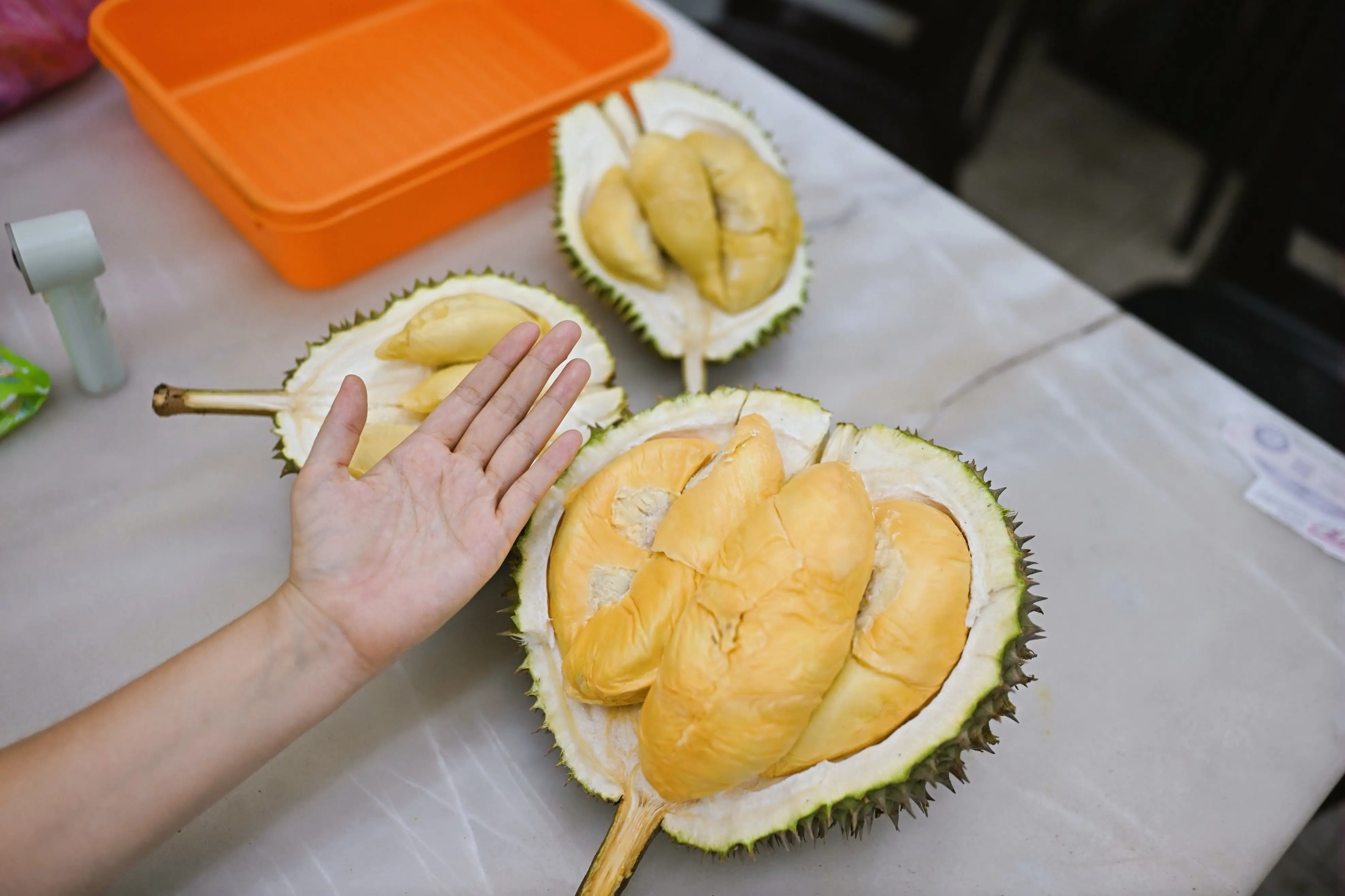
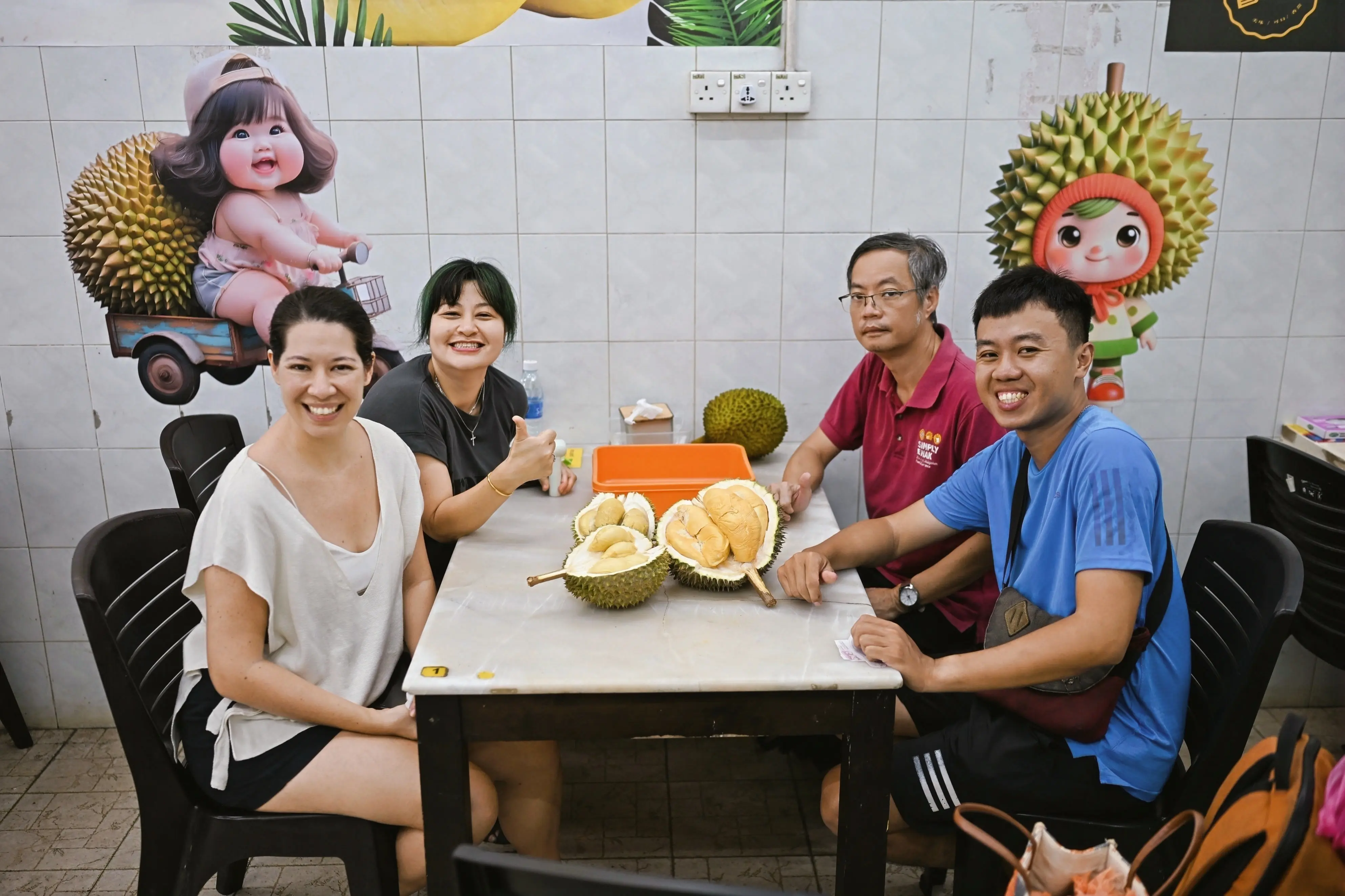
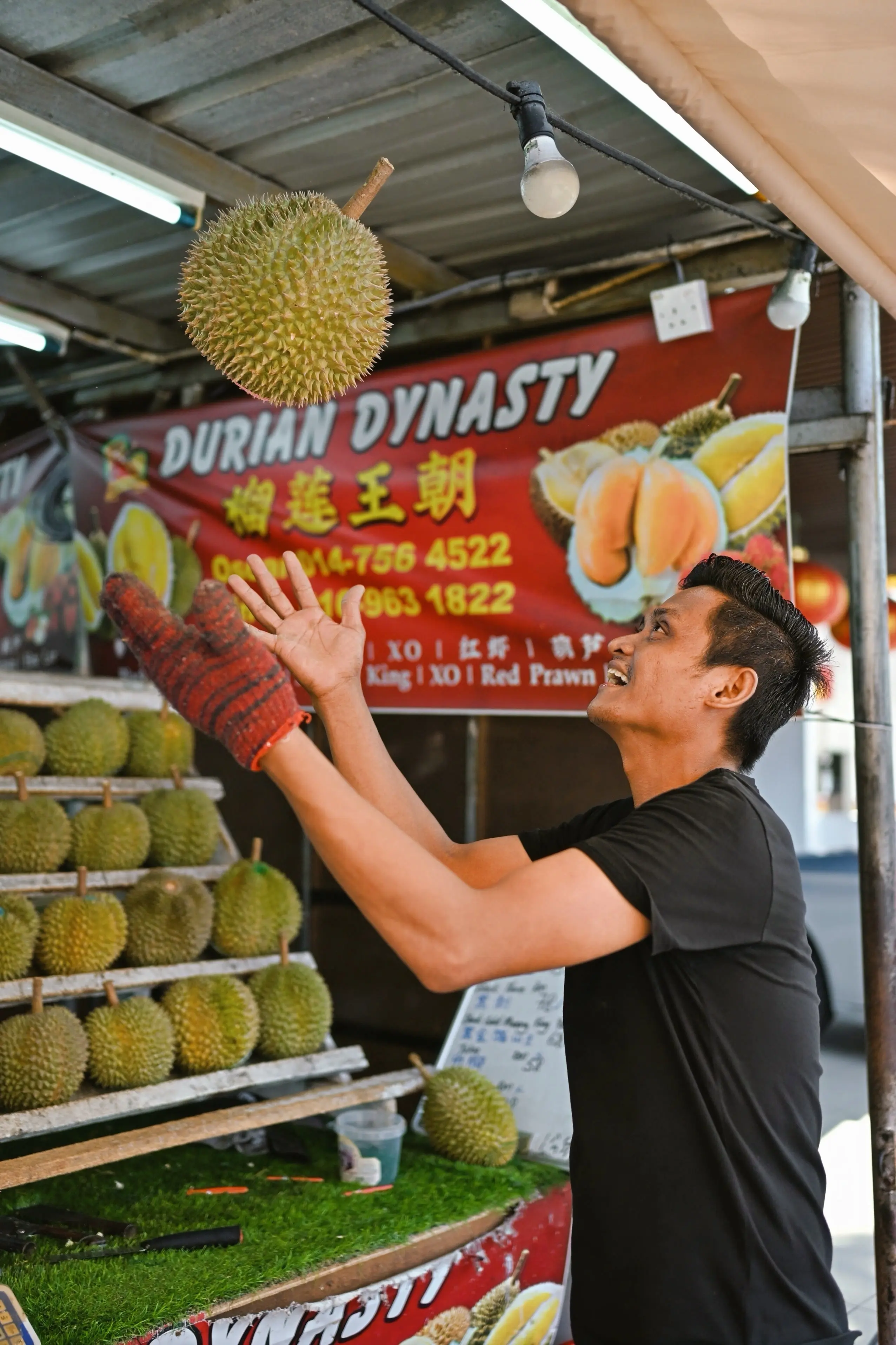
Updated June 2026: Durian season is here again. Our guides have updated this guide with the latest varieties and where to find them this year. When you come to Malaysia you will hear about a flavour that is as common as vanilla in the West. It's called durian. And in my opinion, it's wonderful. I actually consider myself a bit of a durian connoisseur. You’ll hear me or other tour guides talking about durian puffs, durian ice cream, durian milkshakes, durian fritters, durian shaved ice and durian candy…. But when you first see the actual durian fruit you would never think it to be anything edible, with its tough, thorny exterior. And when you smell a durian, you definitely won’t think it’s anything edible. Yes, durians stink. I often wonder how the vendors can stand it. The durian’s ungodly smell is so powerful and lingering that it’s literally banned in many hotels, aeroplanes, hospitals, malls and other public areas. The pungent odour has been described by tourists as smelling like sewage, gasoline, or even rotten vege Now I don’t want to suede you or set your prejudices against taking the plunge into your next fruit adventure. Durian is, as they say, the King of Tropical Fruit. It “stinks like hell, but tastes like heaven”. If this is your first time hearing about Durians or you are keen to expand your knowledge, here’s a great introduction to eating Durians Malaysia. Interesting fact, the word “durian” actually comes from the Malay word duri, meaning “thorn”. Durian is a large fruit from one of the nine fruit-bearing species of durian tree, and not all of them taste the same. It can look similar to jackfruit, but the durian has a thick, thorny rind ranging in co It can come in a variety of shapes and sizes, depending on the species, from oblong to round and it typically weighs about one to three kilos (2 to 7 lb). It can grow as long as 30 centimetres (12 in) and get up to 15 centimetres (6 in) in diameter. I'll say it again. It's out of this world wonderful. Once you get through that thorny exterior and past the smell, you’ll find a sweet, rich and creamy pulp that Malaysians put in many of their food items. For example, you can find it in cakes if you hop inside our local cake shop called Secret Recipe. If Ice cream is your thing, Inside Scoop is the place to go for durian ice cream. And if you are a chocoholic like me, check out Beryl’s Chocolate Shop where they use real durian flesh in their chocolat I recently spoke with a tourist couple who just got back from Temerloh, Pahang which is about 130 kilometres from Kuala Lumpur. They were raving about the Ikan Patin Masak Tempoyak (Tempoyak cooked with fresh Silver Catfish) which is a dish Temerloh is famous for. Tempoyak is a Malaysian condiment made by mixing some salt with the flesh of the durian and letting it ferment at room temperature for three to five days. Its normally made with the lower class durian during peak season when they are in excess. Another great dish to try is Tempoyak with Petai beans. Durian are like apples, in a way Like apples, durians come in different varieties, so don’t expect them all to taste the same or to taste like any other fruit you have ever tried in the West. They have a unique explosion of multi-dimensional flavours that’s a combination of sweet, savoury and creamy all at once. Some have compared it to whipped cream with a hint of chives, whereas others have said it’s like garlic and caramelized sugar. Everyone’s palate is different and will detect different things. I sat with some tourists a while ago as they tasted durian for the first time. One said it was like buttersc So which variety of durian is best? Again it’s like apples. Some prefer the pulpy Washington red whereas others like the crispness of a granny smith. You will have to decide which you like best. Durian kampung, Probably the least expensive to find is the durian kampung. It tends to be sweeter, but the taste can be a bit unpredictable. It may not necessarily have the most flesh and some may contain big seeds so it may not be as filling as expected, which is a good thing so you have room to t D21 and D24, These are the best entry-level durian known mainly for their consistency in a bittersweet taste and creamy texture. What makes this durian good for first-timers is that it has a mild aroma, so it won’t be too overwhelming. Musang King or Mao Shan Wang, This is the most expensive and probably the best-tasting durian. It has a distinctive star shape on the bottom, so make sure you check for that before forking over the big cash. Mao Shan Wang is a rich and creamy durian with several layers of flavour from bitter to swee Black Thorn, This one originated in Penang and has a dark, rich yellow pulp that’s sweet and custardy. You can tell the blackthorn because the thorns are darker on the ends. Red Prawn or Udang Merah, The taste of this one really depends on the age of the tree it came from, which you would have no way of telling so it’s best to ask the vendor. The younger the tree, the sweeter the fruit. Older trees produce more bitter fruit. Another unique characteristic is its reddish- D88, I had one of these last weekends and it filled me up so much that I skipped lunch. It had a great flesh-to-seed ratio and a bittersweet fibrous texture with a bit of an alcoholic aftertaste. Golden Phoenix, This durian is grown from older trees that are only available in Johor. It has a pungent odour and a thin skin that is easily opened. These durians lean to the bitter side and tend to be watery, but a lot of people are drawn to this texture and taste. XO Durian, This pale yellow durian can almost taste like an alcoholic drink because of its fermented, watery flesh. Raja Kunyit, This one is my favourite. It has a firm, smooth, custard-type texture and is sweeter with just a hint of a bitter aftertaste. What’s great about this one is it’s almost seedless. It has just tiny, underdeveloped seeds that can be easily removed (or spit out) from the flesh. Tawa or D162 Durians, This is another fleshy durian with small seeds. It’s almost pure white and has a light, creamy texture that is less sweet than other varieties. Hor Lor Durians, Another one that originated in Penang, it’s a favourite of some because of its drier consistency and sweeter taste. The above is just a brief introduction to the exciting world of durian. There are many other varieties to taste and savour and even more are being developed by durian farmers all over the country. Are you now ready to be a durian connoisseur? It’s important for the budding durian expert to be able to know how to choose a good, quality durian. I’ve found sometimes vendors may try to pass off the old stocks to the tourists and less experienced ones, so it’s best to ask around for the more reputable ones. Even better to take a guide with yo So to understand a little more about what to look for when picking a durian, you have to keep in mind that durians are not “picked” from the trees. Instead, the harvesters in Malaysia wait for the durian to fall and this usually happens at night. They’ll sleep by the tree (but not under it! That’s w Once the durian falls from the tree, it’s ripe and should be eaten within about four to five days. That’s not a very big window to hit. But trust me, you’ll want to pick durian that is in this range. Unripe durian is tasteless and has thick, leathery flesh that’s difficult to pull away from the seed, and the overripe will be too bitter and have a stronger fermented taste. The best time to find and indulge in durian is June - July. When you pick up the fruit, give them a shake. If you hear the fruits knocking against the shell, chances are the fruit is dry and has a good consistency. When the knocking sound isn’t there, the fruit is likely more wet and soggy. Another thing to look for is thick thorns and avoid any that are cra When you pick up the durian, it should feel light and not heavy and waterlogged. Next, give it a good whiff down the seams. If you are struggling to get any scent or get a slight raw fruit smell, then it’s under-ripe. If the smell knocks you over, then it is probably overripe. Even though the durian Durian prices and grades vary depending on the species and their weight. Expert Tip: Look out for wormholes in the durian skin, when you find them you know that someone had a taster before you did. The older generation takes these worms as a sign of a good quality durian, some even go as far as eating the worms. Now that you got your durian, how are you going to open the darn thing? Depending on which variety you chose, this can be a daunting task. It takes some skill, but with practice, anyone can do it. First, flip the durian stem side down. You’ll want to use some gloves or a kitchen towel to handle the durian. Then insert a knife in the bottom centre as far as you can get it and wiggle it back and forth. Doing this should rupture the seams. Pull the knife out and grab the durian with your fingers inside the opening from the knife. By using sheer, brute force, pull open your durian into two halves. Durian is naturally rich in potassium, dietary fibre, iron, vitamin C, and vitamin B complex which makes it excellent for improving skin health, and building muscle, and is good for healthy bowel movements. Further, it also contains minerals like manganese, copper, iron and magnesium and is a great In conventional Chinese wisdom, durian fruit is eaten along with purple mangosteen fruit, a fragrant and slightly acidic fruit that tastes kind of like a mix between orange and peach. The belief is that the “heaty” nature (ying) of durian will be balanced by the cooling properties (yang) of mangoste Also, being that durian is “heaty”, the rule is they should not be eaten with other “heaty” foods or beverages such as alcohol, coffee, curry or tom yum. And it can be a powerful aphrodisiac. There is no scientific evidence to back these claims, however, I say why to risk it and just go with what they say. Pro Tip: To get rid of the aftertaste that may linger after eating durian, try drinking some coconut water and pop a breath mint. The coconut water will also help reduce the odour of the “durian burp”. Durians are planted on a large scale in Penang state and also in Pahang and are one of the most valuable crops for Malaysia. Starting in June to July and lasting until September, truckloads of durian can be seen all over Malaysia, originating from places like Johor and Pahang. An interesting recent study has proven that the flying fox bat, once considered a pest, is mainly responsible for the pollination of the durian flowers. So without the bats, no durian! I love taking the drive out to the farms, getting my hands on the best Durians when they are in season and enjoying the beautiful scenery. Interested in joining? Or do you have a favourite Durian? Let me know in the comments below. The above list is just a sampling of some of the traditional foods you’ll find during Hari Raya month. If you are fortunate to be invited into a Muslim home to celebrate with them, they may have other family traditional dishes as well. Keep in mind, that even though the food is wonderful and a lot o There are so many ways besides food to enjoy the month of Hari Raya as a tourist. Here are a few to think about. A favorite way of many of our tourists is to get invited to an open house to experience first hand how to celebrate alongside a Muslim family and indulge in all the delicacies. It’s not difficult to make amazing Muslim friends in Malaysia and in their faith they do receive extra blessings for inviti Even our government organizes a National Open House for the public to come and enjoy the food. Hari Raya is a time for new clothes and dressing to impress. As a tourist, you can definitely take advantage of the incredible savings during Hari Raya sales. So if you are visiting this time of the year, make sure to leave some space in your suitcase for what you will bring home. The celebration marks the end of Ramadan, the holy month of fasting and is a culmination of the month-long struggle towards a higher spiritual state. Ramadan holds special significance for Muslims, since the Quran, the book of Muslim scripture, was revealed during this month. Fireworks are always a part of Hari Raya which can be both fun and dangerous. In some places fireworks have been banned, but there are always some around to get the real feel for Hari Raya. Since it is a season of giving, you may hear about or encounter (or even get one yourself!) a “green packet”. These little packets are tokens given by the older generation to the young singles around them. What’s inside? Joy. It could be cash or some other trinket to bring luck and happiness. Even though Hari Raya is a celebration, it still hold a special significance to the Muslim community and they take it just as seriously as they do with Ramadan. Charity is openly practiced especially on the last day of Ramadan and all through Hari Raya you can see families giving food and money to t Frequently Asked Questions What is the best season for durian in Malaysia? The peak durian season runs from June to September, with a smaller season from December to February. June and July are the best months for the widest variety. Which durian variety should a first-timer try? D24 or D21 are the best entry-level durians. They have a mild aroma, creamy texture, and bittersweet taste that is not overwhelming. Avoid Musang King on your first try, it is intense. Can I bring durian back to my hotel? Most hotels in Malaysia strictly ban durian due to its strong smell. Eat it at the stall or a designated durian restaurant. Some durian farms offer outdoor seating areas. --- Want to taste Malaysian food with a local guide? Browse our tours and join us for a meal you will not forget.
Love what you just read?
Stay in the loop, add Simply Enak to your Google favorites so you never miss a story.
Ready to taste these flavours yourself?
Join a Simply Enak food tour in Kuala Lumpur or Penang. Small groups, local guides, authentic experiences since 2011.

Pauline
Simply Enak Food Experiences
Pauline has been guiding food tours in Malaysia since 2011, sharing hidden gems and family-run stalls with travellers from around the world.
You might also like